
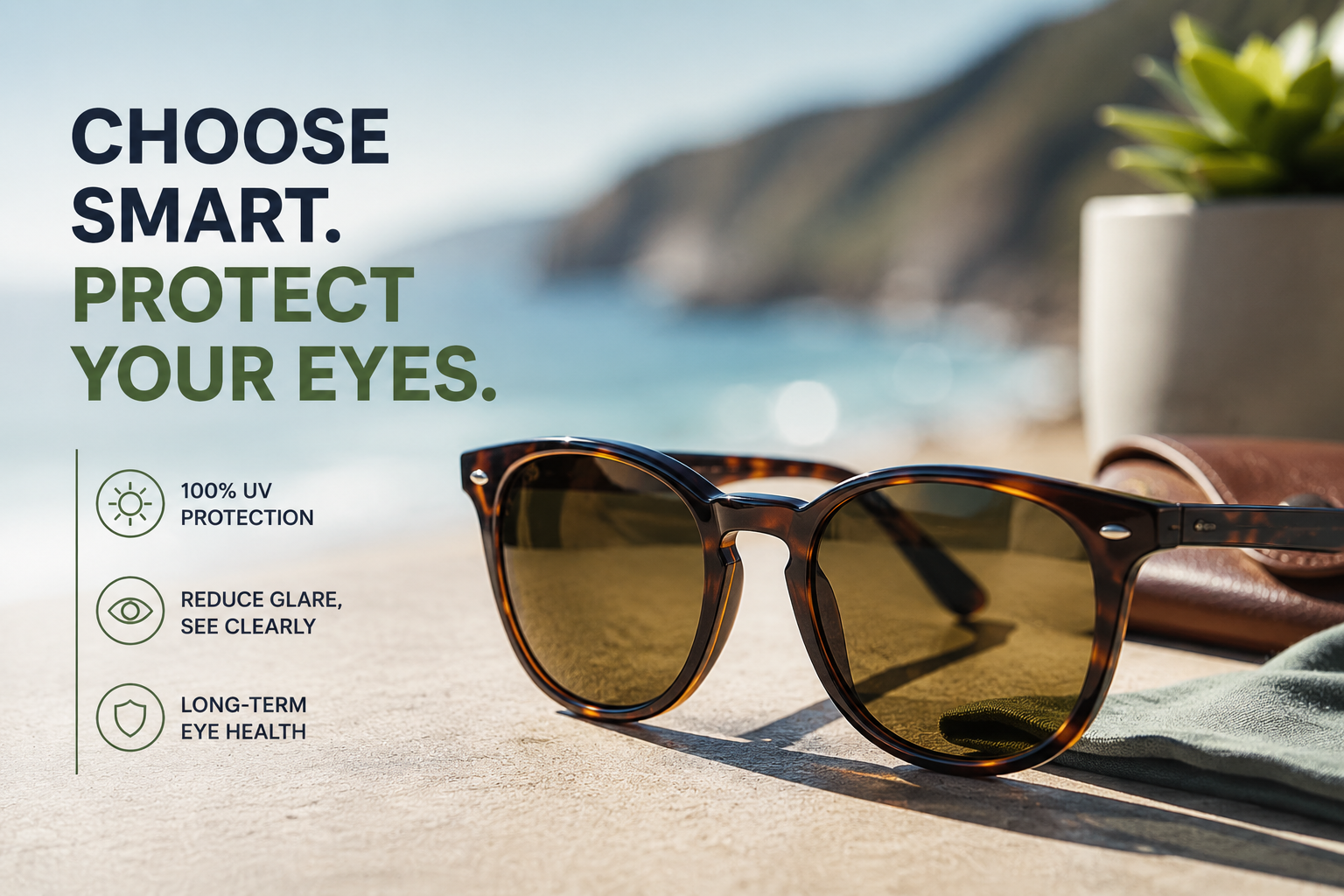
The Smart Buyer's Guide to Choosing Sunglasses That Actually Protect Your Eyes
That stylish pair of sunglasses might look great on your face — but is it actually protecting your eyes? The uncomfortable truth is that many sunglasses sold in India offer minimal UV protection, and some may even harm your eyes more than wearing nothing at all.
Sunglasses aren't just fashion accessories. They're medical devices that shield your eyes from ultraviolet radiation — radiation that contributes to cataracts, macular degeneration, pterygium, and even eyelid cancer. Understanding what makes sunglasses truly protective empowers you to make choices that serve both style and health. The best eye specialist in Vaishali, Ghaziabad, sees preventable sun damage every summer — here's how to avoid joining that list.
The Non-Negotiable: UV Protection
Before considering style, colour, or brand, verify UV protection. This is the single most important feature of any sunglasses. Look for labels stating "100% UV protection" or "UV400" — these indicate the lenses block both UVA and UVB rays up to 400 nanometres wavelength.
Here's why this matters so critically: dark lenses without UV protection are worse than no sunglasses at all. The dark tint causes your pupils to dilate, allowing more light into your eyes. Without UV filtering, you're exposing dilated pupils to intense ultraviolet radiation — a recipe for accelerated eye damage.
Cheap sunglasses from street vendors or unverified online sellers often lack genuine UV protection despite dark tints. The few hundred rupees saved aren't worth decades of cumulative eye damage. Purchase from reputable optical shops or verified retailers who can confirm UV specifications.
Understanding Lens Types
Polarised Lenses: These filter horizontal light waves that create glare from reflective surfaces — water, roads, car bonnets, snow. They're excellent for driving, fishing, and beach activities. However, polarisation can interfere with viewing LCD screens and some instrument panels. They're also unnecessary for general urban use.
Photochromic Lenses: These transition between clear and dark depending on UV exposure. They're convenient for people who move frequently between indoors and outdoors. Modern photochromic lenses respond quickly and achieve good darkness levels, though they may not darken fully inside cars (windshields block the UV that triggers the transition).
Gradient Lenses: Darker at top, lighter at bottom. Useful for driving — the darker upper portion shields against the sun while the lighter lower portion allows clear dashboard viewing. Not ideal for beach use where light reflects upward from sand and water.
Mirror Coatings: Reflective coatings reduce light transmission further, beneficial for very bright conditions like snow sports or high-altitude activities. They don't add UV protection beyond what the base lens provides — that UV filtering is what actually matters.
Lens Colour and Function
Grey lenses: Reduce brightness without altering colour perception. Ideal for general use and driving.
Brown/Amber lenses: Enhance contrast by filtering blue light. Excellent for variable light conditions, golf, and sports.
Yellow/Orange lenses: Maximise contrast in low light. Popular for cycling, skiing, and shooting sports. Not suitable for bright conditions.
Green lenses: Good colour balance with moderate contrast enhancement. Versatile for various activities.
The best eye doctor in Vaishali, Ghaziabad, can recommend specific lens types based on your activities, existing eye conditions, and visual needs.
Frame Considerations
Coverage matters. Larger frames and wraparound styles block peripheral light that sneaks around smaller frames. For outdoor activities, choose frames that provide good coverage from all angles. Small, trendy frames may look stylish but offer limited protection.
Fit matters too. Frames that sit too far from your face allow light to enter from the sides. Those who press too close fog easily and feel uncomfortable. The ideal fit provides close coverage without touching your eyelashes or fogging with exertion.
Weight affects wearability. Heavy sunglasses become uncomfortable during extended wear, leading people to remove them when protection is most needed. Lightweight frames encourage consistent use.
Special Needs, Special Solutions
Prescription wearers: Options include prescription sunglasses, clip-on attachments, photochromic prescription lenses, and fit-over sunglasses worn over regular glasses. Each has trade-offs in convenience, appearance, and cost.
Post-cataract surgery: Eyes become more sensitive to light after cataract removal. Quality sunglasses become essential, not optional. Some patients benefit from lenses that filter specific wavelengths.
Macular degeneration: Blue light filtering may provide additional protection. Amber or brown tints can improve contrast for those with early AMD.
Need guidance on sunglasses for specific eye conditions? Consult the eye care clinic in Vaishali, Ghaziabad. Call 98999 60700.
Children's Sunglasses: Extra Important
Children's eyes are more vulnerable to UV damage than adults'. Their pupils are larger, their lenses clearer (allowing more UV penetration), and they spend more time outdoors. Yet children's sunglasses are often treated as toys rather than protective equipment.
Invest in quality children's sunglasses with verified UV protection. Choose durable frames that withstand active play. Make sunglasses as routine as sunscreen — sun protection habits established in childhood persist into adulthood.
Frequently Asked Questions
Do expensive sunglasses protect better than cheap ones?
Price doesn't guarantee protection. A ₹500 pair with genuine UV400 protection shields your eyes just as well as a ₹15,000 designer pair. What you pay extra for is often brand name, styling, frame materials, and optical clarity — not UV protection.
How can I tell if my sunglasses have real UV protection?
Purchase from reputable optical shops that can verify UV specifications. Some opticians have UV testing equipment. Look for labels stating UV400 or 100% UV protection. The best eye specialist in Vaishali, Ghaziabad, can test existing sunglasses if you're uncertain about their protection level.
Do I need sunglasses on cloudy days?
Yes. Up to 80% of UV rays penetrate cloud cover. If you're outdoors during daylight hours, UV exposure is occurring regardless of visible sunlight. Make sunglasses a habit whenever you're outside.
Can sunglasses prevent cataracts?
UV exposure is a known risk factor for cataracts. While sunglasses cannot guarantee cataract prevention (genetics and age play roles, too), consistent UV protection throughout life significantly reduces risk. Think of it as cumulative — every day of protection matters.
Where can I get prescription sunglasses in Ghaziabad?
The eye care clinic in Vaishali, Ghaziabad, provides prescription sunglasses with verified UV protection. Serving patients from Indirapuram, Kaushambi, Surya Nagar, and throughout Ghaziabad. Visit our clinic for expert guidance.
Should I wear sunglasses while driving?
Absolutely. Driving exposes you to direct and reflected sunlight. Polarised lenses are particularly helpful for reducing road glare. Grey lenses maintain accurate colour perception for traffic signals. Avoid very dark lenses that may impair vision in tunnels or sudden shade.
Invest in Your Eyes
Quality sunglasses are an investment in lifelong eye health. The cumulative effect of UV protection over decades significantly reduces your risk of cataracts, macular degeneration, and other sun-related eye conditions. Choose wisely, wear consistently, and your eyes will thank you for years to come.
SCHEDULE YOUR EYE EXAMINATION TODAY
Call: 98999 60700
Website: www.samyakeyecare.com
Location: Gaur Heights, Sector 4, Vaishali, Ghaziabad
Serving patients from Vaishali | Indirapuram | Kaushambi | Surya Nagar | Ghaziabad


