
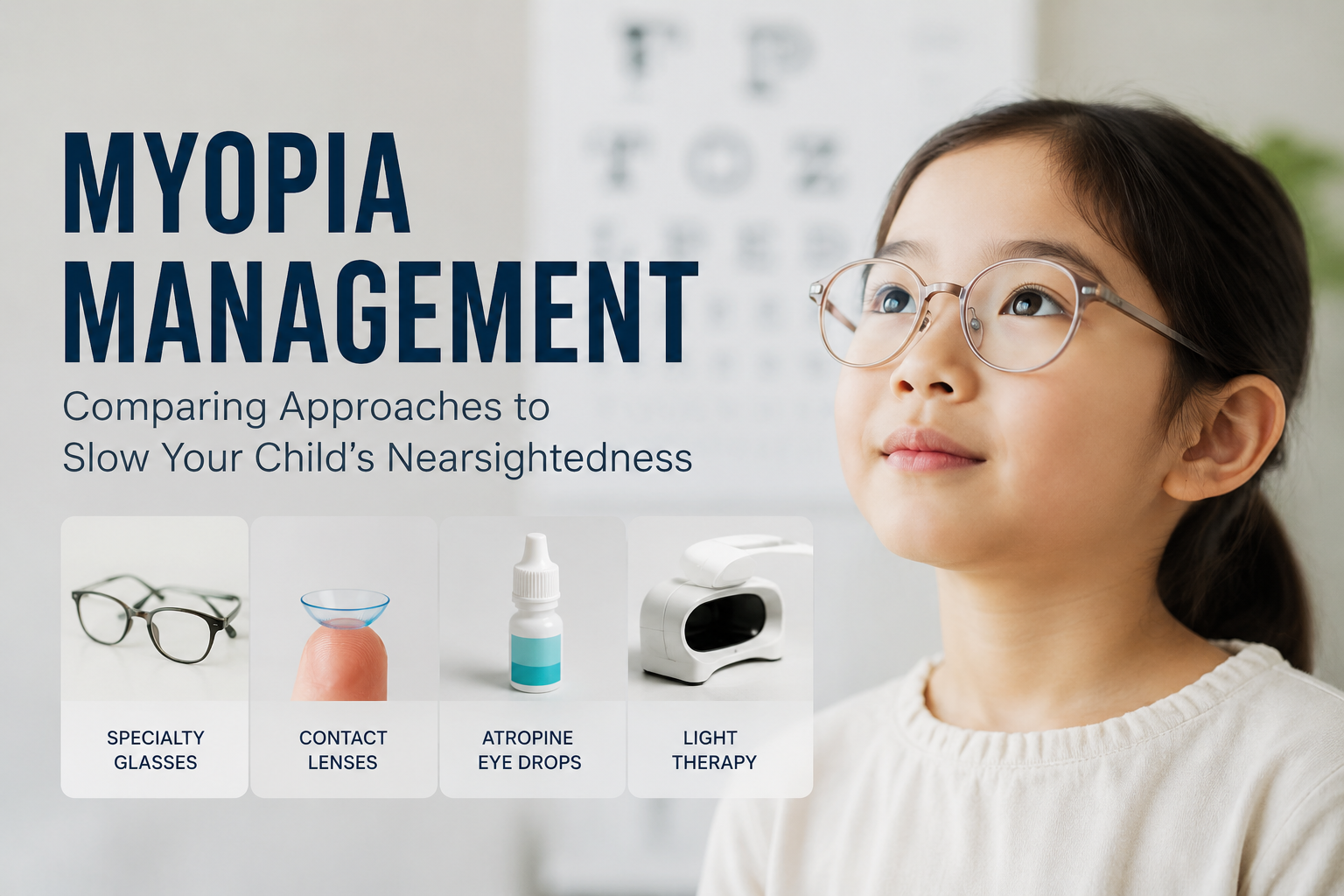
Myopia Management Options: Comparing Approaches to Slow Your Child's Nearsightedness
Your child's myopia prescription increased again. Last year it was -2.00, this year it's -3.00, and you're wondering where this trajectory leads. High myopia isn't just about thicker glasses — it's associated with increased risk of retinal detachment, glaucoma, and other sight-threatening conditions later in life.
The good news is that myopia management has evolved beyond simply prescribing stronger glasses. Multiple evidence-based approaches can slow progression by 30-60%, potentially preventing your child from reaching high myopia levels. Understanding these options helps you make informed decisions with guidance from a myopia management specialist in Vaishali, Ghaziabad.
Option 1: Orthokeratology (Ortho-K)
How it works: Specially designed rigid gas permeable lenses are worn overnight while sleeping. They gently reshape the cornea, providing clear vision throughout the day without glasses or daytime contact lenses. This corneal reshaping also creates peripheral defocus that signals the eye to slow its elongation.
Effectiveness: Studies show a 40-60% reduction in myopia progression compared to standard glasses. Children also benefit from freedom from daytime eyewear for sports and activities.
Best candidates: Children and teenagers with mild to moderate myopia who are responsible enough to handle lens care. Parents must be comfortable supervising lens hygiene.
Considerations: Requires commitment to nightly wear. Initial adaptation period of 1-2 weeks. Regular follow-up appointments essential. Ortho-K lenses in Vaishali, Ghaziabad, are custom-fitted using advanced corneal mapping.
Option 2: Low-Dose Atropine Eye Drops
How it works: Dilute atropine drops (typically 0.01% to 0.05%) are instilled nightly. The mechanism isn't fully understood, but atropine appears to slow the biochemical signals that drive eye elongation.
Effectiveness: Research shows a 30-50% reduction in progression with low-dose formulations. Higher concentrations are more effective but cause more side effects.
Best candidates: Children of any age with progressive myopia, especially those too young for contact lenses. Often combined with other approaches for enhanced effect.
Considerations: Easy to administer. Minimal side effects at low doses. Still requires glasses for vision correction. Prescription required from a qualified specialist.
Option 3: Peripheral Defocus Spectacle Lenses
How it works: These speciality glasses correct central vision while creating controlled defocus in the peripheral field. This optical design signals the eye to slow its growth, mimicking some of the effects achieved with contact lens options.
Effectiveness: Studies show a 30-60% reduction in progression depending on the specific lens design. Newer designs like Stellest and MiyoSmart show promising results.
Best candidates: Children who prefer or require glasses over contact lenses. Good option for younger children not yet ready for lens handling.
Considerations: More expensive than standard glasses. Must be worn consistently during waking hours. The best eye specialist in Vaishali, Ghaziabad, can advise on available options.
Option 4: Soft Multifocal Contact Lenses
How it works: Specially designed daily disposable soft lenses with peripheral defocus zones. Worn during the day like regular contact lenses but engineered to slow eye growth.
Effectiveness: Studies show a 25-50% reduction in progression. Provides a clear vision while offering myopia control benefits.
Best candidates: Children comfortable with contact lens wear who prefer soft lenses over rigid Ortho-K. Good for active children who benefit from daytime contact lens correction.
Ready to explore myopia management for your child? Contact the myopia management clinic in Vaishali, Ghaziabad, at 98999 60700.
Frequently Asked Questions
At what age should myopia management begin?
The earlier the better, typically between ages 6 and 12, when myopia is most progressive. Starting early provides more years of protection during the critical growth period. Even teenagers can benefit, though the window for maximum impact is narrower.
Can these treatments reverse existing myopia?
No. These approaches slow or stop further progression but cannot reverse existing myopia. That's why early intervention matters — starting before myopia becomes severe limits how far it can progress.
Is Ortho-K safe for children?
Yes, when properly fitted and maintained. Ortho-K has been used safely for decades. The key is proper fitting by an experienced specialist, strict hygiene protocols, and regular monitoring. Ortho-K lenses in Vaishali, Ghaziabad, are fitted with comprehensive training for families.
How do I choose between options?
Consider your child's age, maturity, lifestyle, and preferences. A child who plays sports might prefer Ortho-K for daytime freedom. A younger child might start with atropine and progress to lenses later. Your specialist will recommend options based on your child's specific situation.
Where can I find myopia management services?
Samyak Eye Care offers comprehensive myopia management in Vaishali, Ghaziabad, serving families from Indirapuram, Kaushambi, Surya Nagar, and throughout the region. Visit our clinic.
How long does treatment continue?
Typically, until the late teenage years, when myopia naturally stabilises (usually by age 18-20). Stopping too early can result in rebound progression, so consistent treatment through the growth years is important.
Take Action Now
Every year of uncontrolled myopia progression adds to your child's lifetime risk of sight-threatening complications. With multiple proven options available, there's no reason to simply watch prescriptions climb. Early intervention with myopia management can make a meaningful difference in your child's long-term eye health.
SCHEDULE YOUR MYOPIA MANAGEMENT CONSULTATION
Call: 98999 60700
Website: www.samyakeyecare.com
Location: Gaur Heights, Sector 4, Vaishali, Ghaziabad
Serving patients from Vaishali | Indirapuram | Kaushambi | Surya Nagar | Ghaziabad


