
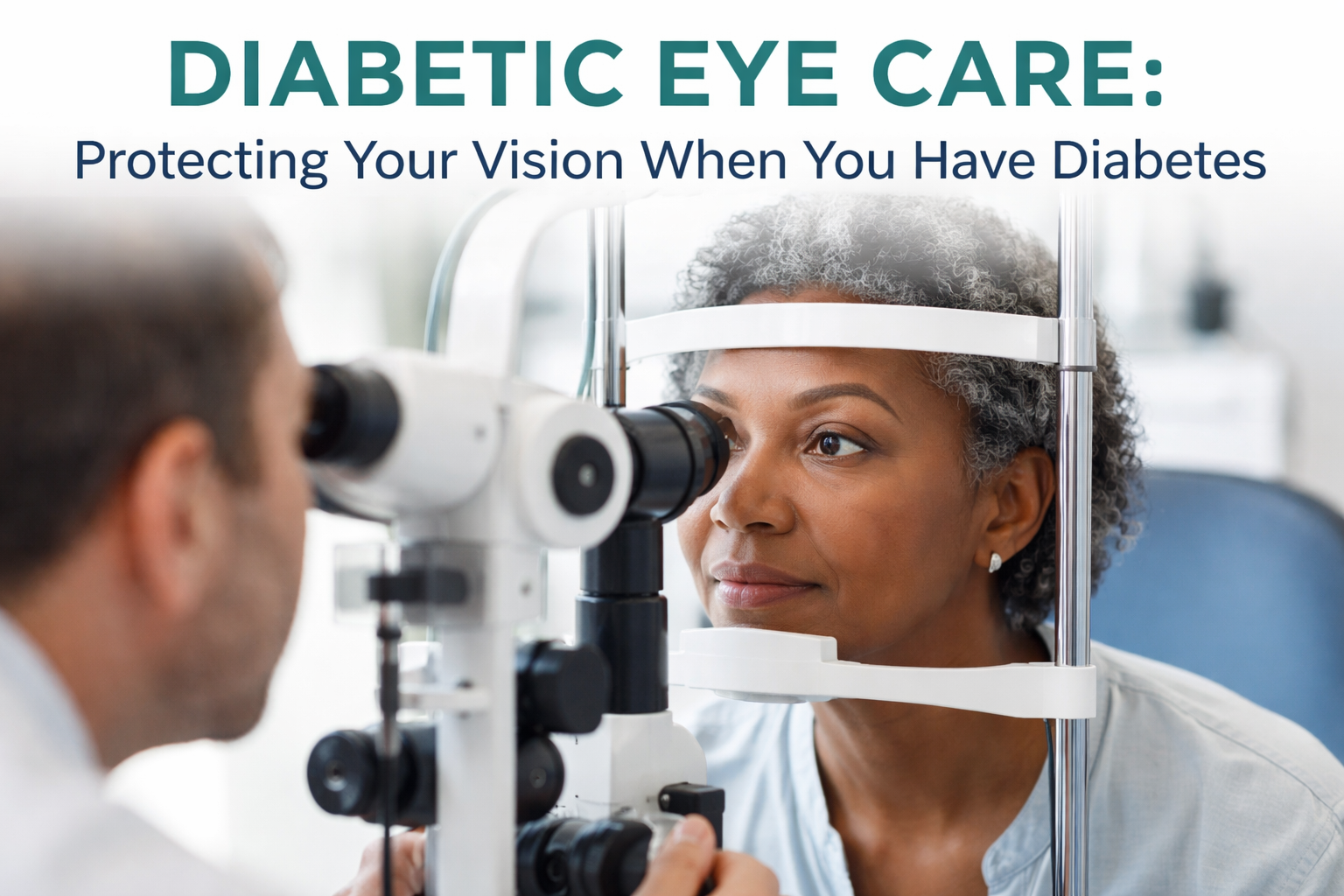
Diabetic Eye Care: Protecting Your Vision When You Have Diabetes
India has over 100 million diabetics. What many don't realise is that diabetes is the leading cause of preventable blindness in working-age adults. The tragedy? Most diabetes-related vision loss is avoidable with regular eye examinations.
If you have diabetes -- whether Type 1, Type 2, or gestational -- your eyes need attention even when your vision seems perfectly fine. Here's what you need to know to protect your sight.
━━━ CRITICAL FACTS FOR DIABETICS ━━━
✓ Diabetic retinopathy affects 1 in 3 diabetics
✓ Vision damage often begins before symptoms appear
✓ 90% of severe vision loss is preventable with early detection
✓ Annual eye exams are essential — not optional
✓ Good sugar control significantly reduces eye damage risk
How Does Diabetes Damage Your Eyes?
High blood sugar levels, over time, damage the tiny blood vessels in your retina -- the light-sensitive layer at the back of your eye. This damage happens gradually and silently.
Initially, these damaged vessels may leak fluid or bleed slightly. As the condition progresses, abnormal new blood vessels grow on the retina's surface. These fragile vessels bleed easily, can cause scarring, and may eventually lead to retinal detachment.
The dangerous part? You might see perfectly well while significant damage accumulates. By the time you notice vision changes, the disease may be advanced.
Diabetic Eye Conditions You Should Know
Diabetic Retinopathy: The most common diabetic eye disease. It progresses through stages from mild (small areas of swelling) to proliferative (abnormal vessel growth). A fundus examination can detect it at any stage.
Diabetic Macular Edema (DME): Fluid leaks into the macula -- the central part of the retina responsible for sharp vision. This causes blurring and distortion of central vision, affecting reading, driving, and recognising faces.
Cataracts: Diabetics develop cataracts earlier, and they progress faster. The lens of the eye becomes cloudy, causing hazy vision.
Glaucoma: Diabetics have nearly double the risk of glaucoma. This condition damages the optic nerve and can cause permanent vision loss without warning symptoms.
📞 Due for your diabetic eye exam? Call 98999 60700 today.
Warning Signs That Need Immediate Attention
Don't wait for your annual exam if you experience any of these:
⚠ Sudden increase in floaters (spots or strings in vision)
⚠ Flashes of light in your vision
⚠ Dark curtain or shadow across your vision
⚠ Sudden blurring that doesn't clear
⚠ Difficulty seeing colours
⚠ Blank or dark areas in your field of vision
These could indicate bleeding, retinal detachment, or other urgent conditions requiring prompt treatment.
How Often Should Diabetics Get Eye Exams?
The short answer: at least annually. But your specific schedule depends on several factors:
→ Type 1 diabetes: First exam within 5 years of diagnosis, then annually
→ Type 2 diabetes: Exam at diagnosis (you may have had it undetected for years), then annually
→ Pregnant diabetics: Exam in first trimester and monitoring throughout pregnancy
→ If retinopathy detected: More frequent exams based on severity
A comprehensive eye examination for diabetics includes a dilated fundus exam, retinal imaging, pressure check, and visual acuity testing.
Treatment Options When Problems Are Found
If diabetic eye disease is detected, several effective treatments exist:
Better blood sugar control: The foundation of all diabetic eye care. Tight control slows progression significantly.
Anti-VEGF injections: Medications injected into the eye that reduce abnormal blood vessel growth and leakage. Highly effective for DME and proliferative retinopathy.
Laser treatment: Seals leaking blood vessels and reduces abnormal vessel growth. Can prevent further vision loss.
Vitrectomy surgery: For advanced cases with significant bleeding or retinal detachment.
Key point: These treatments work best when the disease is caught early. Advanced damage may be irreversible.
Protecting Your Vision: Daily Habits That Matter
1. Manage blood sugar levels consistently — spikes cause cumulative damage
2. Control blood pressure and cholesterol — both affect the eye blood vessels
3. Don't skip medications — consistency matters
4. Quit smoking — it doubles diabetic retinopathy risk
5. Exercise regularly — improves blood sugar control and circulation
6. Keep all eye appointments — even when you feel fine
━━━ THE BOTTOM LINE ━━━
Diabetes doesn't have to mean vision loss. With proper management of your blood sugar and regular eye examinations, you can significantly reduce your risk of serious eye complications. The key is not waiting for symptoms — by then, damage may already be done.
At our Vaishali clinic, Dr. Shalini Jain provides comprehensive diabetic eye care, from routine screening to ongoing monitoring. With 25+ years of experience and having cared for thousands of diabetic patients, we understand the importance of thorough examination and clear communication about your eye health.
SCHEDULE YOUR DIABETIC EYE EXAMINATION TODAY
Call: 98999 60700
Website: www.samyakeyecare.com
Location: Gaur Heights, Sector 4, Vaishali, Ghaziabad
Serving patients across Ghaziabad | Vaishali | Indirapuram | Kaushambi | Noida | Delhi NCR


