
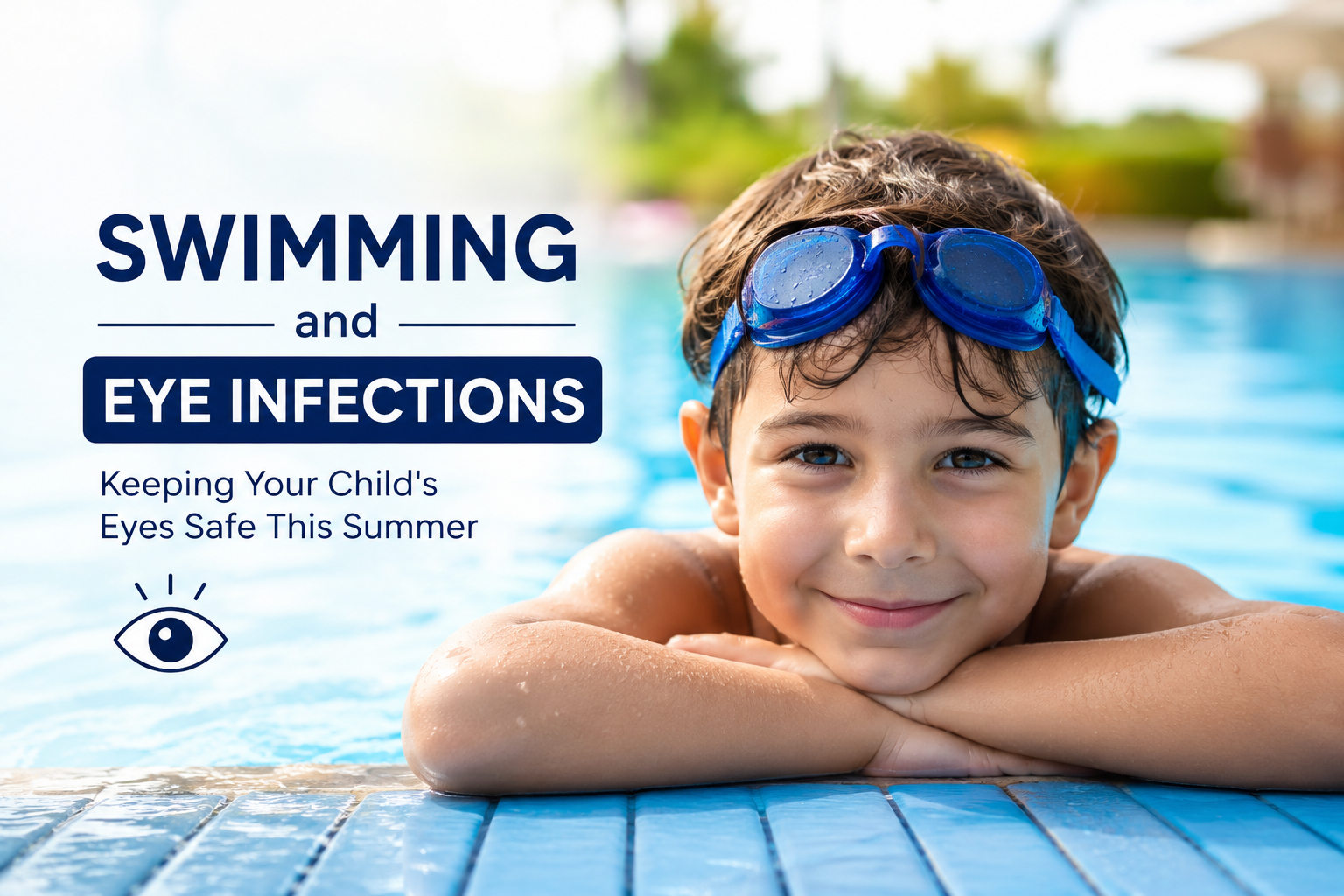
Swimming and Eye Infections: Keeping Your Child's Eyes Safe This Summer Vacation
Summer vacation has arrived, and across Indirapuram, children are doing what children do best — finding every possible opportunity to jump into water. Swimming pools at residential complexes are filled with excited kids. Families pack bags for water parks and resort getaways. Grandparents take grandchildren to the neighbourhood pool. It is the season of splashing, diving, and endless hours in the water.
Last week, a mother from Indirapuram brought her 9-year-old son to see me. He had spent the previous weekend at a water park with his cousins — an absolute blast, according to him. But three days later, his eyes were red, sticky, and constantly watering. He kept rubbing them despite being told not to. The diagnosis was bacterial conjunctivitis, almost certainly acquired during that water park adventure.
As the best eye doctor near Indirapuram, I see a predictable surge in eye infections every summer. Most are preventable with proper precautions. Understanding how swimming affects eyes — and what parents can do about it — helps families enjoy summer activities without unwanted consequences.
Why Swimming Puts Eyes at Risk
Water, whether in pools, water parks, lakes, or the sea, introduces substances and organisms that eyes are not designed to handle. The tear film that normally protects the eye surface gets washed away. Defensive barriers weaken. Irritants and pathogens gain direct access to vulnerable tissues.
Chlorine, used to disinfect pools, is a double-edged sword. It kills many harmful bacteria, making pools safer than untreated water. But chlorine also irritates the eye surface, causing the redness and stinging that swimmers commonly experience. When chlorine combines with sweat, urine, and body oils — inevitable in busy pools — it forms chloramines, which are even more irritating than chlorine itself.
Bacteria survive despite chlorination, particularly in crowded pools where contamination outpaces disinfection. Pseudomonas, Staphylococcus, and other organisms thrive in warm, moist environments. Public pools, water parks, and hotel pools carry higher bacterial loads than well-maintained private pools simply due to user volume.
Natural water bodies present different risks. Lakes and ponds may harbour amoebae and other organisms rarely found in chlorinated water. Seawater contains salt that draws moisture from eye tissues, causing irritation and temporary blur.
Common Eye Problems from Swimming
Chemical Conjunctivitis:
The most common swimming-related eye complaint, chemical conjunctivitis, results from chlorine and chloramine irritation rather than infection. Eyes appear red and feel irritated, but there is no discharge or crusting. Symptoms typically resolve within a few hours to a day after leaving the pool. No treatment is required beyond avoiding further exposure until symptoms clear.
Bacterial Conjunctivitis:
When bacteria enter the eye, true infection develops. Symptoms include redness, significant discharge (often yellow or green), crusting that glues eyelids together overnight, and discomfort that persists and worsens rather than improving. Bacterial conjunctivitis requires antibiotic treatment and typically takes 5-7 days to resolve completely.
Viral Conjunctivitis:
Adenoviruses spread readily in pools and cause highly contagious viral conjunctivitis. Symptoms resemble bacterial infection but with watery rather than thick discharge. Viral conjunctivitis is self-limiting but may take 2-3 weeks to resolve. During this period, the child remains contagious and should avoid swimming.
Acanthamoeba Keratitis:
This rare but serious infection deserves mention, particularly for contact lens wearers who swim. Acanthamoeba, an organism found in lakes, hot tubs, and inadequately chlorinated pools, can cause severe corneal infection that is difficult to treat and potentially sight-threatening. This is why contact lens wear during swimming is strongly discouraged.
Recognising When to Seek Help
Mild redness that resolves within a few hours after swimming typically needs no intervention. However, certain symptoms warrant professional evaluation:
Persistent redness lasting more than 24 hours after swimming suggests more than simple chemical irritation. Discharge, particularly if thick, coloured, or causing crusting, indicates likely infection. Significant pain, as opposed to mild irritation, needs assessment. Any change in vision, even if temporary, deserves prompt attention. Swelling of the eyelids or surrounding tissues suggests spreading infection.
The best eye specialist in Indirapuram can distinguish between simple irritation requiring only supportive care and infection requiring treatment. Early intervention for bacterial infections prevents complications and reduces contagious periods.
Protecting Your Child's Eyes While Swimming
Swim Goggles: Your Best Defence
Well-fitting swim goggles create a barrier between the eyes and water, preventing most swimming-related eye problems. Look for goggles with a comfortable seal that does not leak. Children should be involved in selecting their goggles — a child who likes their goggles is more likely to actually wear them.
Anti-fog goggles reduce the temptation to remove them during swimming. Adjustable straps ensure a proper fit as children grow. Having a spare pair available prevents the common scenario of lost or broken goggles from ending an otherwise enjoyable day.
Rinse Eyes After Swimming
Fresh, clean water rinse immediately after swimming helps remove chlorine, bacteria, and other irritants before they cause problems. Preservative-free artificial tears are even better, actively washing the eye surface and restoring protective moisture. Keep a bottle in your pool bag for post-swim use.
Avoid Contact Lenses
Contact lenses should never be worn while swimming. Lenses can trap bacteria against the cornea, dramatically increasing infection risk. The warm, moist environment under a lens provides ideal conditions for bacterial growth. If your child wears contact lenses, prescription swim goggles offer a safe alternative.
Choose Swimming Venues Wisely
Well-maintained pools with proper chlorination and filtration present lower risks than crowded public venues. Pools that smell strongly of chlorine are often actually under-chlorinated — the smell comes from chloramines, indicating heavy contamination. Clear water without a strong odour suggests better maintenance.
Teach Good Habits
Children should learn not to rub their eyes while swimming or with wet hands afterwards. Rubbing introduces bacteria and causes mechanical irritation to already vulnerable tissues. If eyes feel irritated, rinsing is always preferable to rubbing.
What to Do If Problems Develop
If your child develops red eyes after swimming, first assess severity. Mild redness without discharge that improves over several hours needs only supportive care — cool compresses, artificial tears, and avoiding further swimming until fully recovered.
If symptoms persist beyond 24 hours or include discharge, crusting, significant discomfort, or vision changes, seek professional evaluation. At our clinic, we can examine your child, determine whether infection is present, and prescribe appropriate treatment if needed.
While awaiting an appointment, cool compresses provide comfort. Avoid eye drops unless prescribed — antibiotic drops will not help viral or chemical causes, and some over-the-counter drops can worsen certain conditions. Keep the child's hands clean and discourage rubbing. Wash towels and pillowcases to prevent spreading infection to other family members.
Special Considerations
Children with Allergies:
Children prone to eye allergies may react more strongly to chlorine and other pool chemicals. Pre-treating with antihistamine drops before swimming can reduce reactions. Our dry eye management includes strategies for allergy-prone eyes.
Children with Existing Eye Conditions:
Children under treatment for any eye condition should consult their eye care provider before swimming. Some conditions or treatments make swimming inadvisable temporarily.
After Eye Surgery or Procedures:
Swimming is typically restricted for several weeks after eye procedures. Follow your doctor's specific guidance regarding when water activities can safely resume.
Frequently Asked Questions
Q: How long should my child wait to swim after having an eye infection?
A: For bacterial conjunctivitis, wait until 24-48 hours after completing antibiotic treatment and all symptoms have resolved. For viral conjunctivitis, wait until discharge stops completely — typically 2-3 weeks. The best eye doctor in Indirapuram can advise based on your child's specific situation.
Q: Are chlorine-free pools safer for eyes?
A: Pools using alternative sanitisers (salt water, UV, ozone) may cause less chemical irritation. However, all pools can harbour bacteria. Goggles remain recommended regardless of the disinfection method used.
Q: My child's eyes are always red after swimming, even with goggles. Why?
A: Goggles may be leaking, allowing water contact. Check the seal and fit. Alternatively, your child may be sensitive to goggles or the pressure. Try different goggle styles. If redness persists despite well-fitting goggles, an underlying sensitivity may need evaluation.
Q: Can swimming worsen my child's myopia?
A: Swimming itself does not affect myopia. However, our myopia control clinic recommends outdoor time as protective against myopia progression. Swimming outdoors contributes to this beneficial outdoor exposure.
Q: Is it safe to swim with Ortho-K lenses?
A: Ortho-K lenses are worn only during sleep and removed before daytime activities, including swimming. This makes Ortho-K ideal for swimmers — clear daytime vision without any contact lenses in the water.
Q: Where can I get my child's swimming-related eye problem treated near Indirapuram?
A: Dr. Shalini Jain at Samyak Eye Care — the best eye specialist near Indirapuram — provides comprehensive paediatric eye care, including treatment for swimming-related problems. Our Vaishali clinic is easily accessible from Indirapuram.
Enjoy Summer Swimming Safely
That 9-year-old from Indirapuram with conjunctivitis? A week of antibiotic drops cleared his infection completely. More importantly, his family now keeps swim goggles and artificial tears in their pool bag. He has been swimming several times since without any problems.
Summer vacation and swimming go together naturally. With proper precautions — goggles, post-swim rinsing, and prompt attention to concerning symptoms — your child can enjoy the water while keeping their eyes healthy. Visit our clinic if problems develop, and let us help your family make the most of this summer.
Protect Your Child's Eyes This Summer
Dr. Shalini Jain | Samyak Eye Care Clinic | Vaishali, Ghaziabad
Call: 98999 60700


