
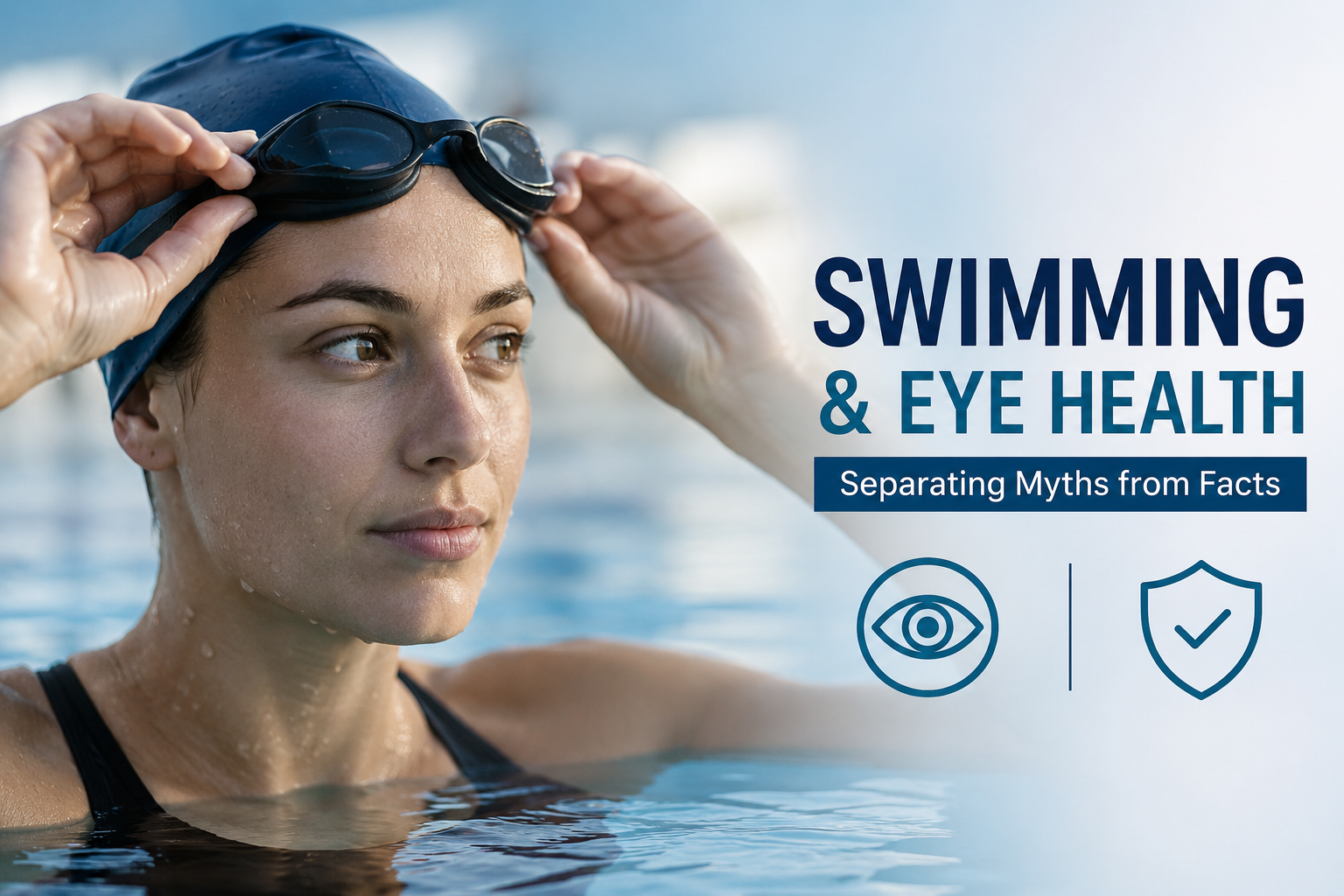
Swimming and Eye Health: Separating Myths from Facts
Summer means swimming — and swimming means a flood of eye-related questions. Is chlorine really damaging your eyes? Can you swim with contact lenses? Does opening your eyes underwater cause infections? With so much conflicting information, it's hard to know what's a genuine concern and what's unnecessary worry.
Let's dive into the most common beliefs about swimming and eye health, separating fact from fiction. The best eye specialist in Vaishali, Ghaziabad, treats swimming-related eye problems every summer — here's what the evidence actually shows.
MYTH: Chlorine Permanently Damages Your Eyes
FACT: Chlorine causes temporary irritation, not permanent damage. The redness and stinging after pool swimming result from chlorine disrupting the tear film that protects your cornea. This discomfort typically resolves within a few hours. However, repeated exposure without protection can lead to chronic irritation and dry eye symptoms over time.
What actually happens: Chlorine strips away the mucin layer of your tear film, leaving the corneal surface exposed. Your eyes respond with redness, watering, and sensitivity. Rinsing with clean water or artificial tears after swimming restores the tear film and relieves symptoms.
MYTH: Red Eyes After Swimming Always Mean Infection
FACT: Most post-swimming redness is chemical irritation, not infection. True swimming-related infections are relatively rare and present with additional symptoms beyond simple redness — persistent discharge, increasing pain, light sensitivity, or vision changes.
When to worry: If redness persists beyond 24 hours, worsens rather than improves, or is accompanied by discharge, pain, or vision changes, consult the best eye doctor in Vaishali, Ghaziabad, promptly. Some pool-related infections require prescription treatment.
MYTH: Opening Your Eyes Underwater Is Harmless
FACT: Pool water is safer than natural water, but neither is truly harmless. Pool chlorine kills most harmful bacteria, making brief underwater eye opening relatively low-risk. However, natural water bodies — lakes, rivers, ponds, and even the ocean — harbour organisms that can cause serious eye infections.
Acanthamoeba keratitis is a rare but severe infection associated with freshwater exposure. This parasite can cause permanent vision loss if not treated promptly. Goggles provide the safest approach in any water environment.
MYTH: Contact Lenses Are Fine for Swimming
FACT: This is dangerously false. Contact lenses should never be worn while swimming. Lenses can trap waterborne pathogens against the cornea, creating ideal conditions for infection. They can also absorb chemicals and bacteria, becoming contaminated beyond simple cleaning.
The best eye specialist in Vaishali, Ghaziabad, sees preventable contact lens infections every summer. Options for swimmers include prescription goggles, daily disposable lenses worn with tight-fitting goggles (discarded immediately after swimming), or simply removing lenses before entering water.
MYTH: Swim Goggles Are Just for Competitive Swimmers
FACT: Goggles are the single most effective protection for recreational swimmers too. They prevent chemical irritation, block waterborne organisms, and reduce the mechanical trauma of water hitting your eyes repeatedly. Modern goggles are comfortable, affordable, and available in prescription versions.
For families with children, goggles are especially important. Children are more likely to open their eyes underwater and less likely to report discomfort early. Making goggles a non-negotiable part of swimming protects their developing eyes.
MYTH: Saltwater Is Safer Than Chlorinated Water
FACT: Ocean water presents its own risks. The salt concentration differs from tears, causing irritation. Marine bacteria and organisms can cause infections. Sand and particles can scratch the cornea. Saltwater pools, while gentler than heavily chlorinated pools, aren't risk-free either.
Experiencing persistent eye problems after swimming? Get expert evaluation at the eye care clinic in Vaishali, Ghaziabad. Call 98999 60700.
Smart Swimming Practices for Healthy Eyes
Wear goggles every time you swim. This simple habit prevents most swimming-related eye problems. Remove contact lenses before swimming and wait at least 30 minutes after removing them before reinserting, allowing any trapped moisture to evaporate. Rinse your eyes with clean water or preservative-free artificial tears after swimming. Don't rub your eyes if they feel irritated — this can worsen inflammation. Stay out of water if your eyes are already red, irritated, or infected.
Frequently Asked Questions
Why do my eyes burn more in some pools than others?
The burning isn't from too much chlorine — it's usually from chloramines, compounds that form when chlorine reacts with body oils, sweat, and urine. Well-maintained pools with good turnover have fewer chloramines. That strong "chlorine smell" actually indicates poor water quality, not excessive chlorination.
Can swimming worsen dry eye?
Yes. Both chlorine and salt water strip protective tear film layers. If you already have dry eye syndrome, swimming without goggles can trigger significant flares. The best eye doctor in Vaishali, Ghaziabad, can recommend protective strategies for dry eye patients who swim regularly.
Are prescription swim goggles worth it?
Absolutely. If you need vision correction, prescription goggles allow you to see clearly while swimming without the risks of contact lens wear. They're available in standard and custom prescriptions and are a worthwhile investment for regular swimmers.
How soon after an eye infection can I swim again?
Wait until all symptoms have completely resolved and you've completed any prescribed treatment. For bacterial conjunctivitis, this typically means waiting at least 24-48 hours after starting antibiotics and until discharge stops. Your eye doctor can advise on your specific situation.
Where can I get swimming-related eye problems treated?
The eye care clinic in Vaishali, Ghaziabad, treats all swimming-related eye conditions. Serving patients from Indirapuram, Kaushambi, Surya Nagar, and throughout Ghaziabad. Visit our clinic for expert care.
My child refuses to wear goggles. What can I do?
Let them choose their own goggles from appropriate options — kids are more likely to wear what they've picked. Ensure proper fit so goggles don't leak or press uncomfortably. Start with short sessions and build up. Make it a non-negotiable rule, like sunscreen. Consider colourful or character-themed goggles for younger children.
Swim Smart, See Clearly
Swimming is excellent exercise and summer fun shouldn't be avoided out of eye health fears. With proper precautions — primarily wearing goggles and avoiding contact lens wear in water — you can enjoy pools, lakes, and oceans while keeping your eyes safe. When problems do arise, prompt professional attention prevents minor irritations from becoming serious infections.
SCHEDULE YOUR EYE EXAMINATION TODAY
Call: 98999 60700
Website: www.samyakeyecare.com
Location: Gaur Heights, Sector 4, Vaishali, Ghaziabad
Serving patients from Vaishali | Indirapuram | Kaushambi | Surya Nagar | Ghaziabad


