
Lazy Eye Detection: Why Early Screening Is Critical for School-Age Children
A mother from East Delhi brought her daughter for a routine pre-school eye examination. The child had never complained about her vision. There were no obvious signs of trouble. Yet examination revealed something concerning: her left eye could not see clearly even with the strongest prescription. The diagnosis was amblyopia — commonly called lazy eye — and at age 6, we were detecting it at a critical juncture.
Amblyopia affects approximately 2-3% of children, making it one of the most common causes of vision impairment in young people. Yet many cases go undetected until it is too late for optimal treatment. The window for effective intervention closes gradually during childhood, making early detection not just helpful but essential.
As the best eye specialist near East Delhi, I encounter amblyopia regularly — sometimes caught early enough for excellent outcomes, sometimes discovered too late for full recovery. Understanding this condition empowers parents to seek timely screening that can make a lifelong difference.
What Is Amblyopia and Why Does It Happen?
Amblyopia occurs when one eye does not develop normal vision during the critical early years of life. The brain receives different quality images from each eye and eventually begins ignoring or suppressing the weaker eye's input. Without proper visual stimulation, that eye never learns to see clearly — even with perfect glasses.
Several conditions can trigger amblyopia. Strabismus (eye misalignment) sends conflicting images to the brain, which responds by suppressing one eye. A significant difference in prescription between the eyes causes the brain to rely on the clearer eye. Obstructions like cataracts or droopy eyelids can deprive an eye of clear images during development.
The critical factor is timing. Visual development occurs most rapidly before age 7-8, with connections between eyes and brain becoming increasingly fixed thereafter. Treatment initiated during this plastic period can achieve remarkable results. Treatment delayed until adolescence or adulthood often produces limited improvement. The best eye doctor in East Delhi emphasises screening during these critical years.
Why Amblyopia Often Goes Undetected
Children with amblyopia typically do not complain about their vision. The stronger eye compensates so effectively that the child functions normally in daily life. They read, play, and navigate without apparent difficulty. Parents see no obvious signs of trouble.
Unlike conditions that cause visible symptoms — crossed eyes, squinting, headaches — amblyopia can be completely invisible to casual observation. A child may have one eye with 6/6 vision and another that cannot see the largest letters on an eye chart, yet appear entirely normal.
School vision screenings, while valuable, may miss amblyopia if they do not test each eye separately and thoroughly. A child can pass a screening by using their good eye, with the amblyopic eye's deficit going completely unnoticed.
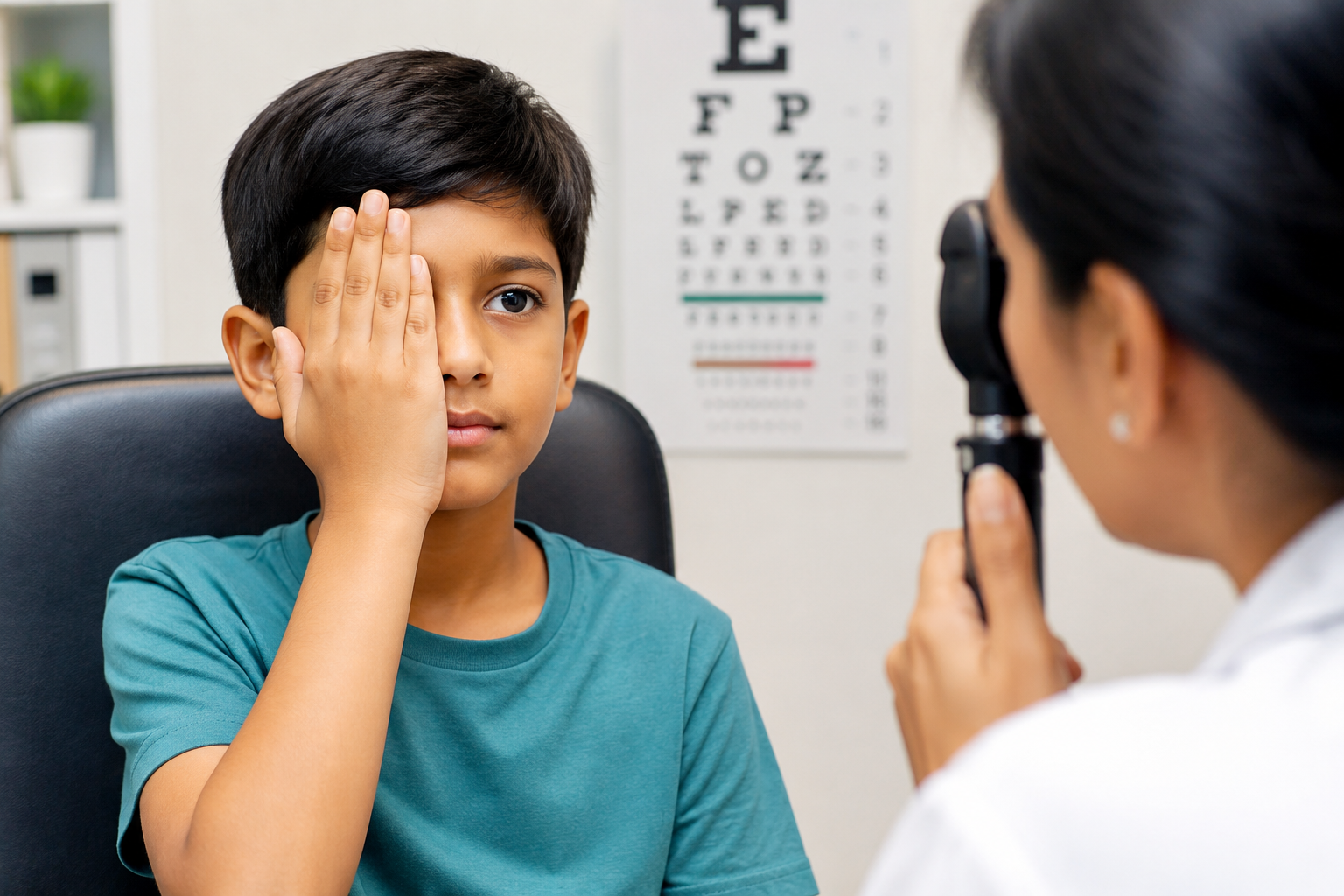
Only a comprehensive examination by a qualified professional reliably detects amblyopia. The best eye specialist in East Delhi tests each eye independently, measures visual acuity precisely, and evaluates eye alignment and health — catching what casual observation and basic screenings miss.
Signs That May Suggest Amblyopia
While many cases show no obvious signs, certain behaviours may warrant earlier screening. A child who consistently covers or closes one eye while reading, watching television, or concentrating may be compensating for a weaker eye. Head tilting to favour one eye's view can indicate imbalance.
Poor depth perception — difficulty catching balls, hesitation on stairs, or clumsiness in unfamiliar environments — may reflect reduced binocular vision. Children who strongly prefer one side for visual tasks or who object strenuously to having one eye covered may be protecting their good eye.
Any visible eye misalignment — eyes that appear to point in different directions, even intermittently — demands immediate evaluation. Strabismus (crossed eyes or wandering eye) frequently causes amblyopia and requires prompt treatment.
Family history matters significantly. If parents, siblings, or close relatives had amblyopia, strabismus, or required early vision treatment, children face an elevated risk and should be screened earlier and more thoroughly.
The Critical Window for Treatment
Visual development follows a timeline that treatment must respect. From birth to age 7-8, the visual system remains highly plastic — capable of rapid learning and adaptation. Treatment during this window can achieve excellent results, often restoring normal or near-normal vision in the affected eye.
Between ages 8 and 12, the window begins closing. Treatment can still produce meaningful improvement, but outcomes are typically less complete. The brain becomes less willing to accept input from an eye it has learned to ignore.
After age 12-14, the visual system has largely stabilised. While some improvement may still be possible, dramatic recovery becomes unlikely. An eye that never learned to see clearly may remain permanently impaired regardless of treatment.
This timeline explains why the best eye doctor in East Delhi emphasises early screening — not at school age but before school age, with ongoing monitoring throughout childhood.
How Amblyopia Is Treated
Treatment addresses the underlying cause while forcing the brain to use the weaker eye. If refractive error contributes, proper glasses correct the optical problem. If strabismus is present, it may require additional intervention.
The cornerstone of amblyopia treatment is occlusion therapy — patching the stronger eye to force the brain to rely on the amblyopic eye. When the good eye is covered, the brain must use the weaker eye, stimulating visual development. Our lazy eye management programme creates customised patching schedules based on each child's age, severity, and response.
Alternative approaches include atropine drops in the stronger eye, which blur its vision and encourage use of the weaker eye. This method may suit children who resist patching or need a supplementary approach.
Vision therapy exercises can enhance treatment outcomes, particularly for amblyopia related to eye coordination problems. Supervised activities strengthen the visual connection between the amblyopic eye and brain while improving binocular function.
Treatment duration varies considerably — some children respond within months, while others require years of management. Consistency matters enormously. The best eye specialist in East Delhi monitors progress regularly, adjusting treatment to optimise outcomes.
What Parents Can Do
Schedule comprehensive eye examinations at age 3, before school entry, and annually during school years. Do not rely solely on school screenings or assume that the absence of complaints means all is well. Early detection saves vision.
If treatment is prescribed, commit to it consistently. Patching can be challenging — children may resist, remove patches, or become frustrated. Creative approaches help: patching during enjoyable activities, using appealing patch designs, setting goals with small rewards, and framing treatment positively.
Attend all follow-up appointments. Amblyopia treatment requires ongoing monitoring and adjustment. Missing appointments delay progress and may compromise outcomes. At our clinic, we work with families to make treatment manageable and sustainable.
Frequently Asked Questions
Q: My child sees fine with both eyes open. Could they still have amblyopia?
A: Yes. The good eye compensates so effectively that children function normally in daily life. Amblyopia is only detected when each eye is tested separately. A comprehensive examination reveals what casual observation cannot.
Q: Is lazy eye the same as crossed eyes?
A: No, though they are related. Strabismus (crossed or wandering eyes) refers to eye misalignment. Amblyopia (lazy eye) refers to reduced vision development in one eye. Strabismus often causes amblyopia, but amblyopia can occur without visible eye misalignment.
Q: Can amblyopia be treated in adults?
A: Treatment in adults is challenging, and outcomes are limited. Some improvement may be possible, but the dramatic results achievable in young children become unlikely after visual development is complete. This is why early detection is so critical.
Q: How long does amblyopia treatment take?
A: Treatment duration varies from months to years depending on severity, age at detection, and treatment consistency. Many children require ongoing monitoring even after active treatment concludes to ensure the amblyopia does not recur.
Q: Will my child need to wear a patch all day?
A: Patching schedules are individualised. Some children patch for a few hours daily; others require longer periods. The best eye doctor in East Delhi determines the appropriate schedule based on your child's specific situation and adjusts as treatment progresses.
Q: Where can I get my child screened for lazy eye near East Delhi?
A: Dr. Shalini Jain at Samyak Eye Care — the best eye specialist near East Delhi — provides comprehensive lazy eye screening and management. Our Vaishali clinic is easily accessible from East Delhi.
Early Detection Saves Vision
That 6-year-old from East Delhi? Detected at the edge of the optimal treatment window, her amblyopia responded well to consistent patching and glasses. After two years of treatment, her previously amblyopic eye now sees 6/9 — not perfect, but functional and stable. Had she been detected earlier, outcomes might have been even better. Had she been detected later, improvement might have been minimal.
Your child's visual development happens once. The window for intervention is finite. Do not wait for obvious symptoms that may never appear. Schedule a comprehensive eye examination and know for certain whether your child's visual system is developing normally. Visit our clinic for an expert evaluation that could protect your child's vision for life.
Screen Your Child for Lazy Eye
Dr. Shalini Jain | Samyak Eye Care Clinic | Vaishali, Ghaziabad
Call: 98999 60700


