
Kids' Eyewear Buying Guide: What Parents Should Know Before Choosing Glasses
When your child needs glasses for the first time, the experience can feel overwhelming. With countless frame styles, lens materials, and coating options available, many parents in Indirapuram find themselves unsure about which choices will best serve their child's vision needs and active lifestyle. Making the right decision matters—poorly chosen eyewear can affect not just your child's vision but also their comfort, confidence, and willingness to wear their glasses consistently.
At Samyak Eye Care Clinic in Vaishali, we understand that choosing children's eyewear requires balancing durability, comfort, style, and proper vision correction. This comprehensive guide will help parents in Indirapuram and across Ghaziabad make informed decisions when selecting spectacles for their children.
Getting the Right Prescription First
Before shopping for frames, ensure your child has an accurate, up-to-date prescription from a qualified eye care professional. Children's eyes change rapidly during growth years, and an outdated prescription can cause eye strain, headaches, and poor academic performance.
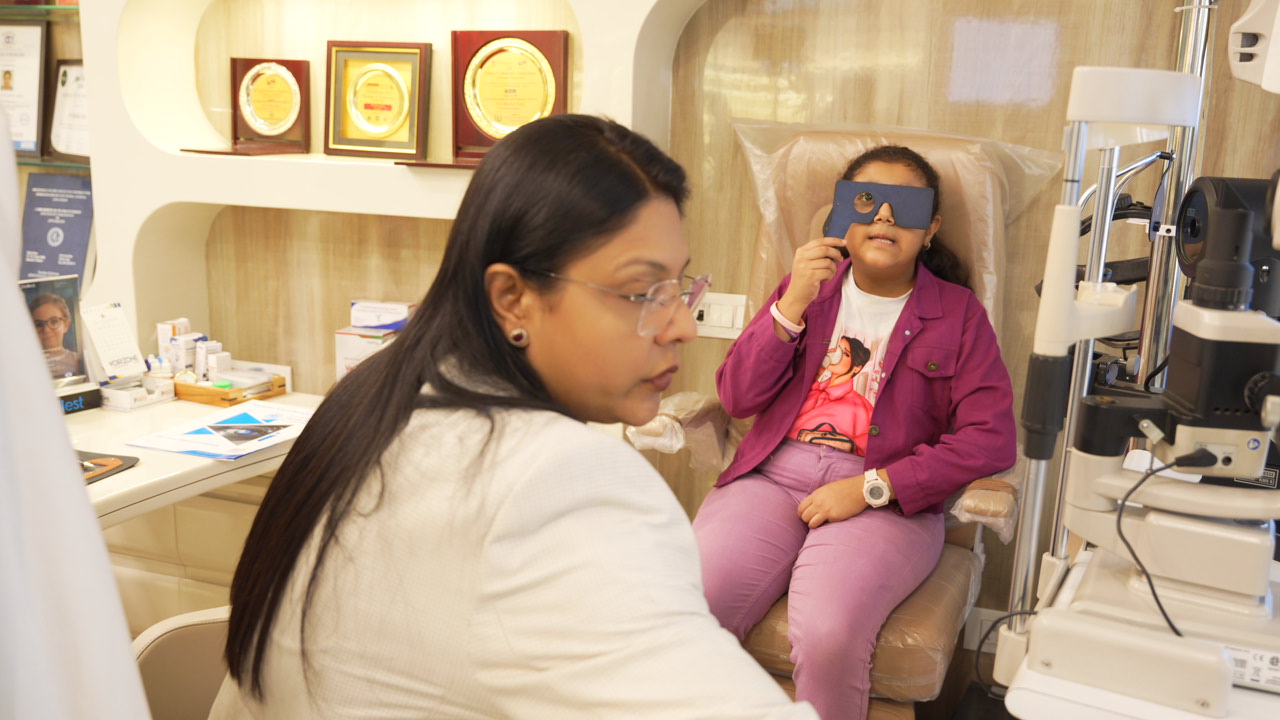
A paediatric eye examination goes beyond just determining prescription strength. It evaluates overall eye health, checks for conditions like lazy eye (amblyopia), and assesses how well both eyes work together. For children with progressive myopia (nearsightedness), specialised treatment options may be recommended alongside regular spectacles.
Is your child due for an eye examination? Call 98999 60700 to schedule a comprehensive paediatric eye check-up today.
Choosing the Right Frame for Your Child
The frame is just as important as the lenses. A well-fitted frame ensures proper vision correction, stays comfortable during long wear, and withstands the active lifestyle of most children.
Frame Materials: What Works Best for Kids?
Flexible Plastic (TR-90): This lightweight, hypoallergenic material is ideal for young children. TR-90 frames can bend without breaking, returning to their original shape after being twisted or sat upon. They're comfortable for all-day wear and come in vibrant colours that appeal to children.
Memory Metal (Titanium Alloys): These frames offer excellent durability and can withstand significant bending without permanent damage. They're lighter than traditional metal frames and suitable for older children who prefer a more mature look.
Silicone Rubber: Perfect for toddlers and very young children, silicone frames are virtually indestructible. They wrap around the head securely and stay in place during active play.
Acetate: A durable plastic offering the widest variety of colours and patterns. Best suited for older children and teenagers who are more careful with their belongings.
Getting the Perfect Fit
A properly fitted frame should:
• Sit comfortably on the nose without pinching or sliding down
• Position the eyes in the centre of each lens
• Extend slightly beyond the outer edge of the face
• Have temples (arms) that reach the ears without pressing too tightly
• Stay in place when your child looks down or moves their head
Children with flat nose bridges may need frames with adjustable nose pads or Asian-fit designs that distribute weight more evenly. Spring hinges are highly recommended as they allow the temples to flex outward, accommodating different head sizes and reducing the risk of breakage.
Selecting the Safest Lens Material
For children's glasses, safety is paramount. Glass lenses, once common, are now rarely recommended for children due to their weight and shattering risk. Modern lens materials offer far better protection.
Polycarbonate: The gold standard for children's eyewear. Polycarbonate lenses are 10 times more impact-resistant than standard plastic lenses and provide built-in UV protection. They're lightweight, making them comfortable for all-day wear. Most eye care professionals recommend polycarbonate as the default choice for children under 18.
Trivex: Similar impact resistance to polycarbonate with superior optical clarity. Trivex lenses are slightly thicker but provide crisper vision, making them an excellent choice for children with lower prescriptions who prioritise visual quality.
High-Index Plastic: Recommended for children with strong prescriptions. These thinner, lighter lenses reduce the "coke bottle" appearance associated with high-powered lenses, improving both aesthetics and comfort.
Need help choosing the right lenses for your child? Visit our optical services for expert guidance on the best options.
Essential Lens Coatings for Children
The right coatings can significantly extend lens life and improve your child's visual experience.
Scratch-Resistant Coating: Essential for children's glasses. While no lens is completely scratch-proof, this coating significantly increases durability against the everyday wear and tear of childhood.
Anti-Reflective Coating: Reduces glare from computer screens, tablets, and classroom whiteboards. This is particularly important for students who spend significant time on digital devices, helping prevent digital eye strain.
Blue Light Filtering: With increasing screen time for homework and entertainment, blue light filtering can help reduce eye fatigue and potentially improve sleep patterns by limiting blue light exposure in the evening hours.
UV Protection: While polycarbonate and Trivex lenses include UV protection, adding a UV coating to other lens materials protects young eyes from harmful ultraviolet radiation during outdoor activities.
Involving Your Child in the Selection Process
Children who help choose their glasses are more likely to wear them consistently. Allow your child to express preferences about colour and style within the range of appropriate options. Many children feel self-conscious about wearing glasses initially, so selecting frames they find appealing can boost confidence and compliance.
Consider having your child try on several pairs and take photos for comparison. Sometimes children change their minds between the optical shop and home, so having visual references helps reinforce their choice.
Backup Pairs and Alternative Options
For children with significant prescriptions, a backup pair of glasses is highly recommended. Lost or broken glasses can leave your child unable to see clearly for days while replacements are made, affecting their schoolwork and daily activities.
For active children or those involved in sports, consider prescription sports goggles that provide better protection during physical activities. These specialised frames stay secure during movement and protect against impact injuries.
Older children may also be candidates for Ortho-K lenses, which are worn overnight to reshape the cornea, providing clear vision during the day without glasses or daytime contacts. This option is particularly beneficial for children with progressing myopia, as it can help slow the progression of nearsightedness.
Get Expert Guidance for Your Child's Eyewear
Choosing the right glasses for your child involves balancing multiple factors: safety, durability, comfort, style, and proper vision correction. At Samyak Eye Care Clinic, Dr. Shalini Jain and our experienced team have helped thousands of families across Indirapuram and Ghaziabad find the perfect eyewear solutions for their children.
With over 25 years of experience, 4+ government awards, and the trust of 37,500+ satisfied patients, we provide comprehensive paediatric eye care from examination through to dispensing and follow-up care.
Give your child the gift of clear, comfortable vision. Schedule an appointment today.
Call: 98999 60700
Website: www.samyakeyecare.com
________________________________________
Disclaimer: This article is for informational purposes only and does not constitute medical advice. Children's eyewear needs vary based on prescription strength, lifestyle, and individual requirements. Please consult Dr. Shalini Jain at Samyak Eye Care Clinic for a comprehensive evaluation and personalised recommendations for your child.


