
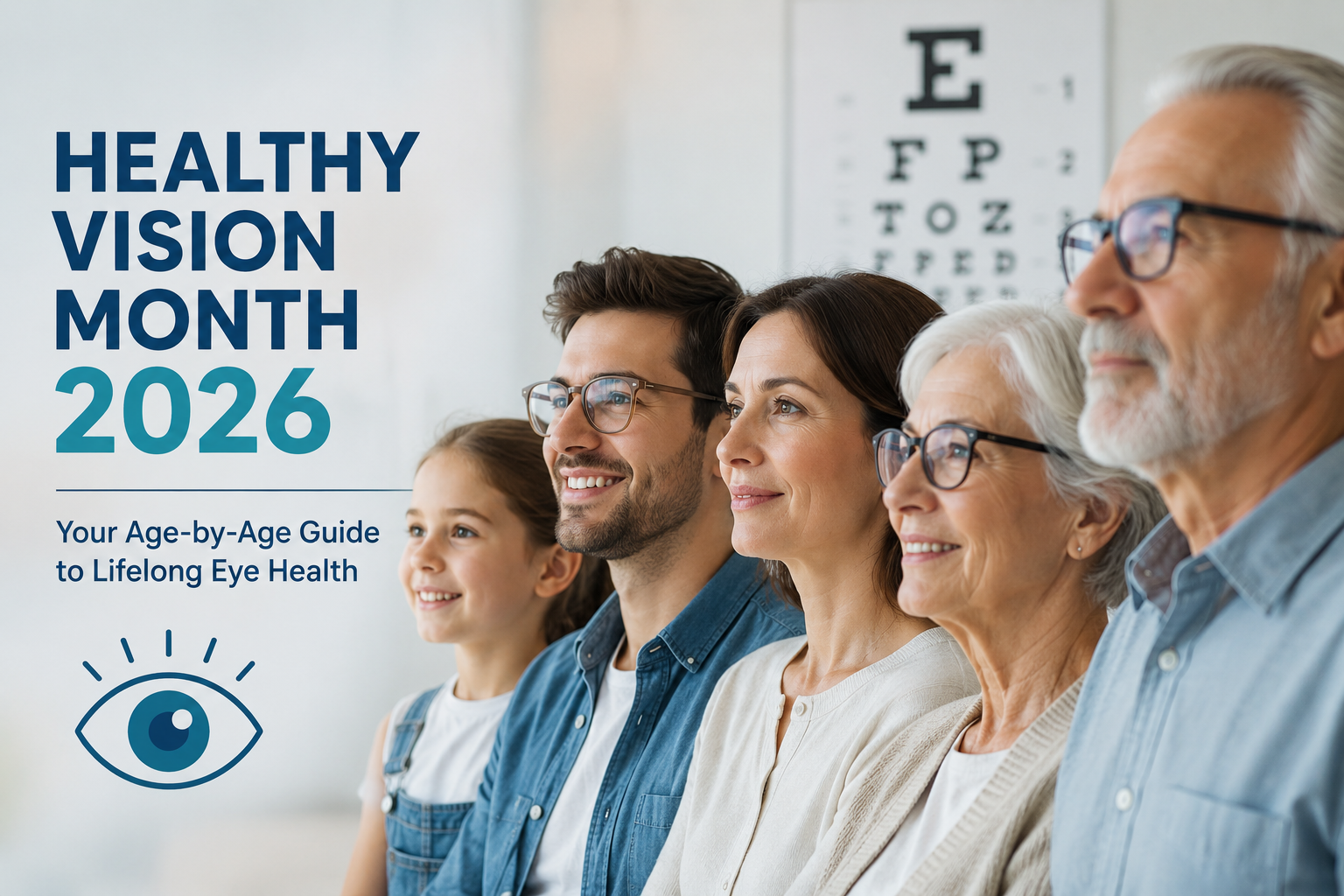
Healthy Vision Month 2026: Your Age-by-Age Guide to Lifelong Eye Health
May marks Healthy Vision Month — a perfect reminder that clear sight doesn't happen by accident. Our eyes change throughout life, and the care they need at 5 differs vastly from what they require at 50. Yet most families approach eye health reactively, visiting a specialist only when problems arise.
This comprehensive guide breaks down eye care essentials by life stage, helping you protect vision at every age. Whether you're a parent concerned about your child's screen time or an adult noticing the first signs of presbyopia, the best eye specialist in Vaishali, Ghaziabad, can help you develop habits that preserve sight for decades.
Ages 0-5: Building the Foundation
Vision development happens rapidly in the first years of life. By age three, a child's visual system is largely formed — making early detection of problems critical. Yet many parents assume their toddler sees perfectly simply because they haven't complained.
Key habits for this age group:
Schedule the first comprehensive eye exam by age one, even without symptoms. Conditions like amblyopia (lazy eye) and strabismus (crossed eyes) respond best to early treatment. Limit screen exposure — the American Academy of Paediatrics recommends no screens before 18 months. Ensure adequate outdoor play, which research links to reduced myopia development. Watch for signs like sitting too close to the TV, frequent eye rubbing, or tilting the head while looking at objects.
The best eye doctor in Vaishali, Ghaziabad, uses child-friendly techniques to assess vision even before children can read letters.
Ages 6-12: The School Years
Academic demands increase sharply, and undetected vision problems often masquerade as learning difficulties. A child who can't see the board clearly may be labelled inattentive. One who struggles with reading might be assumed to have a learning disability when the real issue is uncorrected farsightedness.
Essential practices:
Annual eye examinations before each school year catch developing myopia early. The 20-20-20 rule during homework: every 20 minutes, look at something 20 feet away for 20 seconds. Proper lighting for reading and studying. Outdoor activity for at least two hours daily — natural light exposure helps prevent myopia progression. Quality sunglasses with UV protection for sports and outdoor play.
For children showing signs of myopia, the eye care clinic in Vaishali, Ghaziabad, offers specialised myopia management programmes to slow progression.
Ages 13-25: The Digital Generation
Teenagers and young adults face unprecedented visual demands. Between smartphones, laptops, and tablets, many spend 8-10 hours daily on screens. Digital eye strain has become almost universal, while myopia rates continue climbing.
Vision protection strategies:
Position screens at arm's length and slightly below eye level. Use blue light filtering after sunset if screens affect sleep. Keep devices' brightness matched to ambient lighting. Consider computer glasses if spending extended hours on screens. Continue annual examinations — prescription changes are common during these years. Contact lens wearers must follow hygiene protocols strictly to prevent infections.
The best eye specialist in Vaishali, Ghaziabad, regularly counsels young patients on sustainable screen habits that protect long-term vision.
Ages 26-40: The Stable Years
For most adults, vision stabilises during these years. Prescriptions stop changing rapidly, and serious eye diseases remain rare. Yet this is precisely when complacency creeps in — when skipping annual examinations seems harmless.
Priorities for this age:
Comprehensive eye exam every 1-2 years, even without symptoms. Baseline screening for glaucoma and other conditions that develop silently. UV-protective sunglasses outdoors — cumulative sun damage contributes to cataracts later. Safety eyewear during home improvement projects and sports. Addressing dry eye symptoms from air conditioning and prolonged computer use.
Ages 41-60: The Presbyopia Years
Around age 40, virtually everyone notices reading becoming harder. Menus blur. Phone screens require longer arms. This is presbyopia — the gradual loss of near focusing ability as the lens stiffens. It's inevitable, but manageable.
Managing this transition:
Reading glasses, progressives, or multifocal contact lenses correct near vision. Annual examinations become essential as the risk for glaucoma, cataracts, and macular degeneration increases. Diabetics and those with high blood pressure need more frequent monitoring. Maintain good lighting for close work. Report any sudden vision changes immediately.
The best eye doctor in Vaishali, Ghaziabad, helps patients navigate presbyopia with solutions that match their lifestyle.
Ages 60+: Vigilant Protection
Age-related eye conditions become increasingly common after 60. Cataracts affect most people eventually. Glaucoma silently steals peripheral vision. Macular degeneration threatens central sight. Yet early detection makes most conditions treatable.
Critical practices:
Annual comprehensive examinations with dilation. Monitoring for AMD if there's a family history. Managing systemic conditions like diabetes and hypertension that affect the eyes. Adequate lighting throughout the home to prevent falls. Reporting any new floaters, flashes, or vision changes promptly.
Need a comprehensive eye examination for yourself or family members? Contact the best eye specialist in Vaishali, Ghaziabad, at 98999 60700.
Frequently Asked Questions
How often should I get my eyes examined?
Children should have annual exams. Adults aged 18-60 with no risk factors can go every 1-2 years. After 60, annual exams are essential. Those with diabetes, high blood pressure, or a family history of eye disease need more frequent monitoring.
My child passed the school vision screening. Is that enough?
School screenings check only basic distance vision. They miss many conditions, including farsightedness, astigmatism, and eye coordination problems. A comprehensive examination by the best eye doctor in Vaishali, Ghaziabad, evaluates complete visual function.
Can eye exercises prevent the need for glasses?
Eye exercises help specific conditions like convergence insufficiency, but cannot correct refractive errors like myopia or hyperopia. If you need glasses, exercises won't eliminate that need. However, certain visual training can improve eye coordination and reduce strain.
Is it true that reading in dim light damages eyes?
Reading in dim light causes eye strain and fatigue, but doesn't cause permanent damage. However, adequate lighting makes reading more comfortable and reduces headaches. Good lighting habits benefit long-term eye comfort.
Where can I get a comprehensive family eye examination?
The eye care clinic in Vaishali, Ghaziabad, serves patients of all ages from Indirapuram, Kaushambi, Surya Nagar, and throughout the region. With 25+ years of experience, 37,500+ patients treated, and 4+ government awards, Dr. Shalini Jain provides thorough examinations for the entire family.
What's the difference between an optometrist and an ophthalmologist?
Optometrists perform eye exams, prescribe glasses and contacts, and diagnose common conditions. Ophthalmologists are medical doctors who can perform surgery and treat complex eye diseases. For comprehensive primary eye care, either can serve you well.
Celebrate Healthy Vision Month with Action
This Healthy Vision Month, commit to proactive eye care for your entire family. Schedule those overdue examinations. Establish screen-time boundaries. Invest in quality sunglasses. Small habits compound into a lifelong clear vision. Visit our clinic to begin your family's journey to a healthier vision.
SCHEDULE YOUR HEALTHY VISION MONTH EXAMINATION
Call: 98999 60700
Website: www.samyakeyecare.com
Location: Gaur Heights, Sector 4, Vaishali, Ghaziabad
Serving patients from Vaishali | Indirapuram | Kaushambi | Surya Nagar | Ghaziabad


