
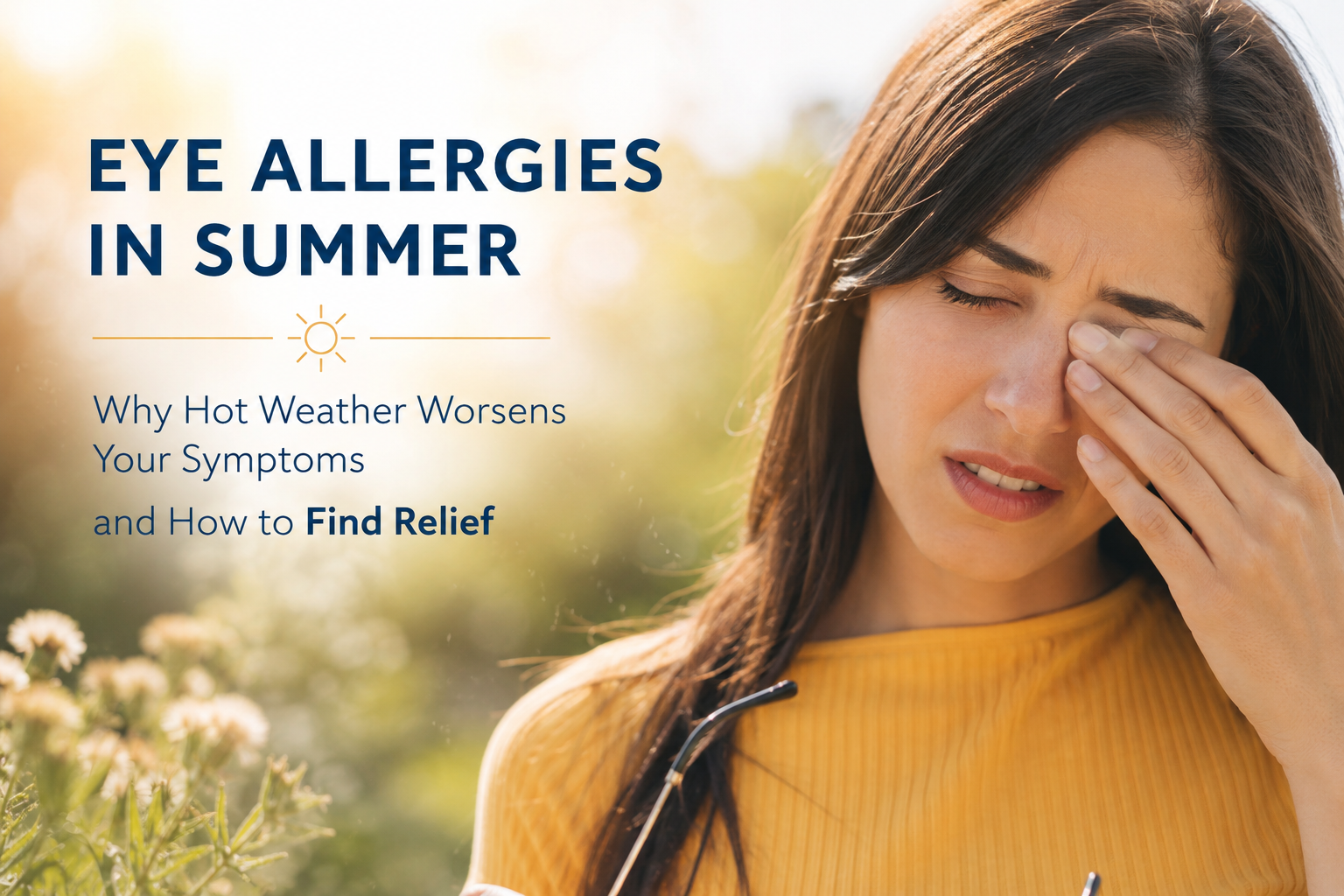
Eye Allergies in Summer: Why Hot Weather Worsens Your Symptoms and How to Find Relief
"My eyes have been unbearable since April," complained a software professional from Surya Nagar during her recent visit. "Constant itching, watering, redness — and nothing I try helps for long." Her story is familiar. Every summer, my clinic fills with patients suffering from allergic eye symptoms that seem more intense than in any other season.
Summer allergies differ from their spring counterparts. While spring brings tree pollen, summer in Delhi NCR delivers a complex mixture of grass pollen, dust mites thriving in humidity, air pollution concentrated by heat inversions, and particulate matter from construction and traffic. This cocktail attacks sensitive eyes relentlessly.
As the best eye specialist near Surya Nagar, I help patients understand why their eyes suffer more in summer and what actually works for relief. The difference between suffering through the season and managing it effectively often comes down to understanding the underlying mechanisms.
Understanding Summer Eye Allergies
Allergic conjunctivitis occurs when allergens trigger an immune response in the eye's conjunctiva — the clear membrane covering the white of the eye and lining the eyelids. Mast cells in this tissue release histamine and other inflammatory chemicals, causing the characteristic itching, redness, swelling, and watering.
Summer amplifies this process in several ways. Heat increases pollen production and keeps allergens airborne longer. Dust storms — common in June — saturate the air with irritants. Air conditioning, while providing relief from heat, circulates and concentrates indoor allergens. Hot, dry winds carry irritants directly into unprotected eyes.
The best eye doctor in Surya Nagar sees patients with varying severity of allergic response. Some experience mild, seasonal discomfort. Others develop severe reactions that significantly impact quality of life and require aggressive management.
Common Summer Allergens in Delhi NCR
Grass pollen peaks during summer months, affecting those who breezed through spring unaffected. Unlike tree pollen that disperses widely, grass pollen tends to stay closer to ground level — right where we breathe and where our eyes are exposed.
Dust mites thrive in the humid conditions that precede the monsoon. While invisible to the naked eye, their waste products are potent allergens. Bedding, upholstery, and carpets harbour millions of these microscopic creatures. Summer heat combined with sweat creates ideal breeding conditions.
Construction dust, vehicle emissions, and industrial pollutants become concentrated when summer heat creates atmospheric inversions that trap air near ground level. Days when the air appears hazy are particularly challenging for allergy sufferers.
Indoor allergens matter too. Air conditioners that have not been cleaned properly circulate mould spores and accumulated dust. The recirculated air in offices and malls concentrates whatever allergens occupants bring in on their clothing and bodies.
Symptoms That Indicate Allergic Conjunctivitis
Itching is the hallmark symptom — the urge to rub is almost irresistible. This distinguishes allergic from infectious conjunctivitis, where discomfort tends more toward burning or grittiness than true itching. The itching typically affects both eyes, though one may be worse than the other.
Watering seems paradoxical given that eyes feel dry and irritated, but it represents the body's attempt to flush out allergens. The tears produced during allergic reactions differ in composition from normal tears, often feeling thicker or stickier.
Redness results from dilated blood vessels responding to inflammation. Swelling of the eyelids and sometimes the conjunctiva itself (chemosis) can occur in severe reactions. Some patients develop dark circles under their eyes — allergic shiners — from chronic congestion.
Light sensitivity and blurred vision may accompany severe episodes. The best eye specialist in Surya Nagar evaluates these symptoms to distinguish allergies from other conditions requiring different treatment.
Why Over-the-Counter Drops Often Disappoint
Many allergy sufferers grab whatever eye drops are available at the pharmacy, use them inconsistently, and conclude that nothing works. The problem is often a mismatch between the product and the problem, not ineffective treatment.
Simple artificial tears help wash away allergens and soothe irritation but do not address the underlying immune response. They provide temporary relief that fades quickly when allergen exposure continues.
Decongestant drops (containing naphazoline or tetrahydrozoline) reduce redness temporarily by constricting blood vessels. However, regular use causes rebound redness worse than the original problem. These should never be used long-term.
Antihistamine drops block histamine receptors and provide genuine relief from itching. Newer formulations also stabilise mast cells to prevent future histamine release. These work best when used consistently, not just when symptoms peak.
The best eye doctor in Surya Nagar can recommend appropriate treatment based on your specific symptoms, severity, and response to previous treatments.
Effective Management Strategies
Allergen avoidance, while not always possible, significantly reduces symptom burden. Wrap-around sunglasses block airborne allergens from reaching the eyes. Keeping windows closed during high-pollen periods — typically in the morning — limits indoor exposure.
Cool compresses provide immediate relief during acute flares. The cold constricts blood vessels, reducing redness and swelling. Avoid rubbing despite the temptation — rubbing releases more histamine and worsens symptoms.
Regular use of preservative-free artificial tears washes allergens from the eye surface and maintains tear film integrity. Refrigerating these drops enhances their soothing effect.
For moderate to severe allergies, prescription-strength antihistamine-mast cell stabiliser combinations provide superior control. These work best when started before peak season and maintained consistently. The best eye specialist in Surya Nagar can prescribe appropriate medications.
When Allergies Mask Other Problems
Chronic eye rubbing from allergies can contribute to progressive conditions. In susceptible individuals, aggressive rubbing over years may contribute to keratoconus — a condition where the cornea thins and bulges. Our keratoconus management programme addresses this connection.
Allergies can also mask or coexist with dry eye syndrome. Both conditions cause redness and discomfort, but they require different treatment approaches. Using antihistamines for what is actually dry eye can worsen the underlying problem.
Children with severe allergies sometimes develop complications affecting vision. The best eye doctor in Surya Nagar monitors young allergy patients carefully for signs of corneal involvement.
Frequently Asked Questions
Q: Can I become allergic to something I was not allergic to before?
A: Yes. Allergies can develop at any age, and sensitisation to new allergens happens throughout life. Many adults who had no childhood allergies develop them in their twenties, thirties, or later.
Q: Why are my eye allergies worse indoors than outdoors?
A: Indoor allergens like dust mites, pet dander, and mould accumulate in enclosed spaces. Air conditioning recirculates these allergens continuously. Sometimes outdoor allergens brought inside on clothing concentrate in the indoor air.
Q: Should I stop wearing contact lenses during allergy season?
A: Lenses can accumulate allergens and prolong exposure. Daily disposables are better than extended-wear lenses during allergy season. Some patients switch to glasses temporarily or consider Ortho-K to avoid daytime lens wear entirely.
Q: Do allergy shots help with eye symptoms?
A: Immunotherapy can reduce allergic sensitivity over time, potentially improving eye symptoms along with nasal and respiratory symptoms. However, it requires commitment to regular injections over the years. Discuss with an allergist whether you are a candidate.
Q: My child rubs their eyes constantly. How do I stop them?
A: Address the underlying itch with appropriate treatment rather than just telling them to stop. Cool compresses, proper antihistamine drops, and keeping hands clean all help. Our paediatric eye care includes allergy management for children.
Q: Where can I get treatment for eye allergies near Surya Nagar?
A: Dr. Shalini Jain at Samyak Eye Care — the best eye specialist near Surya Nagar — provides comprehensive allergy evaluation and treatment. Our Vaishali clinic is easily accessible from Surya Nagar.
Take Control of Your Summer Allergies
That software professional from Surya Nagar? After proper evaluation revealed severe grass pollen sensitivity combined with dust mite allergy, we implemented a comprehensive plan: prescription antihistamine drops, environmental modifications, and strategies to reduce allergen exposure. Within two weeks, her symptoms were manageable. Within a month, she described her eyes as comfortable for the first time since March.
Summer allergies are not something you must simply endure. Proper diagnosis identifies your specific triggers. Targeted treatment addresses the underlying immune response. Strategic prevention reduces allergen exposure. Visit our clinic to start enjoying clear, comfortable eyes despite the summer heat.
Get Relief from Eye Allergies
Dr. Shalini Jain | Samyak Eye Care Clinic | Vaishali, Ghaziabad
Call: 98999 60700


