
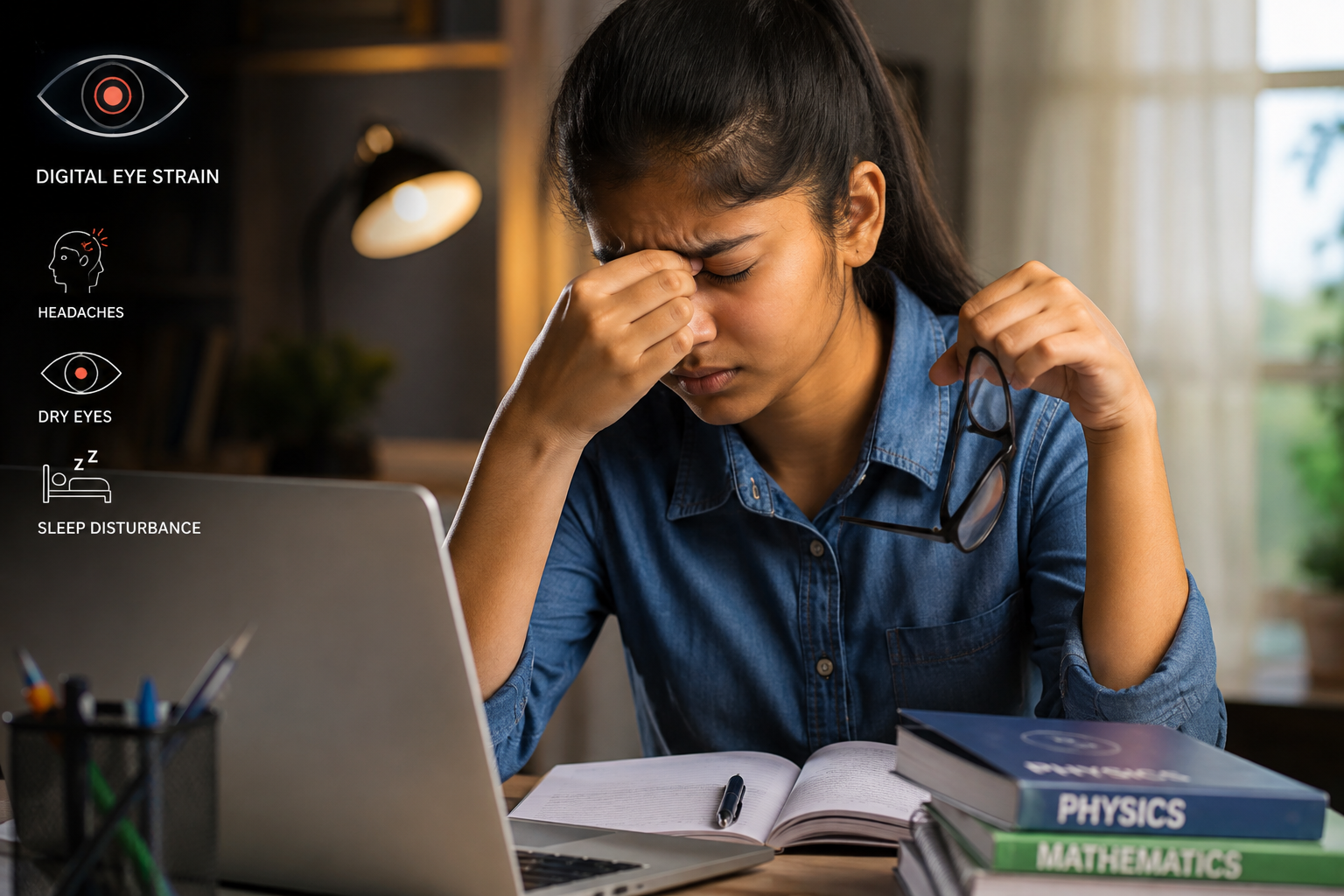
Digital Eye Strain in Indian Students: The Growing Epidemic and Solutions
India's classrooms have transformed. Tablets replace textbooks. Online coaching supplements school instruction. Assignments are submitted digitally. Entertainment streams through screens. A typical Indian student now spends 6-10 hours daily staring at digital displays — a dramatic shift that has occurred within a single generation.
The consequences are becoming impossible to ignore. Across Delhi NCR, from Vaishali to Noida, from Ghaziabad to Greater Noida, I see a steady stream of students complaining of tired eyes, persistent headaches, blurred vision, and difficulty concentrating. Their symptoms share a common cause: digital eye strain, also known as computer vision syndrome.
As the best eye doctor in Delhi NCR, I witness this epidemic daily. Understanding its scope, causes, and solutions is essential for parents, educators, and students navigating our increasingly digital educational landscape.
The Scale of the Problem
Recent studies suggest that 60-80% of Indian students who use digital devices regularly experience symptoms of digital eye strain. The numbers are highest among urban students, competitive exam aspirants, and those engaged in extensive online learning.
The shift began gradually but accelerated dramatically. Online classes during school closures normalised screen-based learning. Coaching centres adopted digital platforms. Even primary school homework increasingly requires screen interaction. Add recreational screen time — games, social media, streaming — and many students accumulate more screen hours than sleep hours.
Simultaneously, outdoor time has decreased. Urban Indian children average less than one hour daily outdoors — far below recommendations for healthy visual development. This combination of increased near work and decreased outdoor exposure is driving unprecedented rates of myopia alongside digital eye strain.
Understanding Digital Eye Strain
Digital eye strain encompasses multiple symptoms arising from prolonged screen use:
Eye fatigue:
Heavy, tired, aching eyes that worsen through the day and improve with rest.
Headaches:
Often frontal or temporal, appearing during or after screen use, frequently attributed to study stress rather than visual causes.
Dry, irritated eyes:
Burning, grittiness, excessive tearing, and redness from reduced blink rate during screen focus.
Blurred vision:
Difficulty focusing, particularly when shifting between screen and distance, or fluctuating clarity.
Neck and shoulder pain:
From poor posture while viewing screens, often interrelated with visual strain.
These symptoms arise from several mechanisms. Reduced blink rate during screen focus causes tear film instability. Sustained near focus fatigues the accommodation system. Blue light exposure may contribute to discomfort. Poor ergonomics compound the strain.
Why Students Are Particularly Vulnerable
Several factors make students especially susceptible to digital eye strain:
Developing visual systems:
Young eyes are still maturing, and excessive near work during development may permanently alter their trajectory — contributing to myopia progression in addition to strain symptoms.
Academic pressure:
Indian students face intense competitive pressure that drives extended study hours. Taking breaks, limiting screen time, or prioritising eye comfort can feel impossible when examination performance determines future opportunities.
Multiple devices:
Students often shift between phones, tablets, laptops, and televisions throughout the day, accumulating screen time that exceeds any single device's usage count.
Limited awareness:
Many students do not recognise their symptoms as related to screen use. They push through discomfort, attributing headaches to stress and eye fatigue to lack of sleep.
Inadequate breaks:
Online classes and coaching sessions often run continuously without the natural breaks that physical classrooms provide.
The Myopia Connection
Digital eye strain and myopia progression are interrelated concerns. Both are driven by extensive near work and limited outdoor time. Children experiencing significant digital eye strain often show more rapid myopia progression than those with minimal screen exposure.
Our myopia control clinic addresses this connection directly. Slowing myopia progression during school years protects long-term eye health while reducing the visual demands that contribute to strain.
Ortho-K lenses offer dual benefits: clear daytime vision without glasses and documented myopia control effects. For students whose myopia is progressing rapidly alongside digital eye strain, Ortho-K addresses both concerns simultaneously.
Practical Solutions for Students
The 20-20-20 rule:
Every 20 minutes, look at something 20 feet (6 metres) away for 20 seconds. This simple practice relaxes accommodation and encourages complete blinking. Setting phone timers helps establish the habit.
Screen positioning:
Screens should be at arm's length, with the top of the screen at or slightly below eye level. Looking slightly downward reduces exposed eye surface and slows tear evaporation.
Lighting optimisation:
Ambient lighting should be approximately half the screen brightness. Avoid using screens in dark rooms. Position screens to eliminate glare from windows and overhead lights.
Blink consciously:
Remind yourself to blink fully and frequently during screen use. Incomplete blinks — common during concentration — fail to spread tears adequately.
Artificial tears:
Preservative-free lubricating drops, used proactively before symptoms develop, maintain tear film stability during extended screen sessions.
Outdoor time:
Aim for at least 1-2 hours daily outdoors. Outdoor light exposure appears protective against both myopia progression and digital eye strain.
Device settings:
Increase font sizes, enable night mode for evening use, and adjust contrast for comfort. These simple changes reduce visual demand without limiting necessary screen use.
When Professional Help Is Needed
Self-help strategies work for many students, but certain situations warrant professional evaluation.
Persistent symptoms despite implementing good practices suggest underlying issues. Frequent headaches require assessment to rule out uncorrected refractive error or binocular vision problems. Progressively worsening symptoms indicate the need for intervention beyond lifestyle changes.
Our Digital Vision Syndrome management provides comprehensive evaluation and targeted treatment. This may include computer-specific glasses, vision therapy for eye teaming problems, or dry eye treatment for tear film dysfunction exacerbated by screen use.
The best eye specialist in Delhi NCR evaluates students holistically — considering not just symptoms but their academic demands, screen habits, and visual development trajectory.
A Message to Parents and Educators
Digital learning is here to stay. Our children will use screens throughout their education and careers. The goal is not to eliminate screen use — an impractical and ultimately unhelpful response — but to make it sustainable.
Parents can model healthy screen habits, enforce break times, prioritise outdoor activities, and take children's eye complaints seriously. Educators can incorporate visual breaks into online sessions, vary teaching methods to reduce continuous screen focus, and educate students about eye health.
Regular eye examinations — annually for school-age children — catch developing problems early. Do not wait for complaints; many children adapt to discomfort without recognising it as abnormal.
Frequently Asked Questions
Q: Is blue light from screens harmful to my child's eyes?
A: Evidence for permanent harm from screen blue light is limited. Blue light may affect sleep quality when screens are used before bed. Blue light filtering may improve comfort for some users but is not essential for everyone.
Q: How many hours of screen time is safe for students?
A: There is no magic number that guarantees safety. More important than total hours are break frequency, ergonomics, outdoor time, and attention to symptoms. Some students tolerate more screen time than others.
Q: Should my child wear computer glasses even without a prescription?
A: Some students benefit from computer glasses with appropriate coatings even without refractive needs. A comprehensive examination determines whether this would help your child specifically.
Q: Can digital eye strain cause permanent damage?
A: Strain symptoms themselves resolve with rest and typically do not cause permanent damage. However, the myopia progression associated with extensive near work does create permanent changes with long-term consequences.
Q: My child's symptoms only occur during exam season. Is this still digital eye strain?
A: Increased symptoms during intensive study periods are characteristic of digital eye strain. The visual system that manages moderate screen use may be overwhelmed by examination preparation intensity. The pattern itself suggests visual causes.
Q: Where can I get my child evaluated for digital eye strain in Delhi NCR?
A: Dr. Shalini Jain at Samyak Eye Care — the best eye doctor in Delhi NCR — provides comprehensive Digital Vision Syndrome evaluation and treatment. Our Vaishali clinic serves the entire NCR region.
Protect Your Student's Digital-Age Vision
The epidemic of digital eye strain among Indian students demands attention. Symptoms are widespread. Consequences extend beyond discomfort to affect learning, concentration, and long-term visual health. Yet solutions exist — practical strategies that allow students to meet academic demands while protecting their eyes.
Visit our clinic for comprehensive evaluation and personalised management strategies. Your child's eyes must serve them through years of education and decades of career. Protecting them now is an investment in their future.
Address Your Student's Digital Eye Strain
Dr. Shalini Jain | Samyak Eye Care Clinic | Vaishali, Ghaziabad
Call: 98999 60700


