
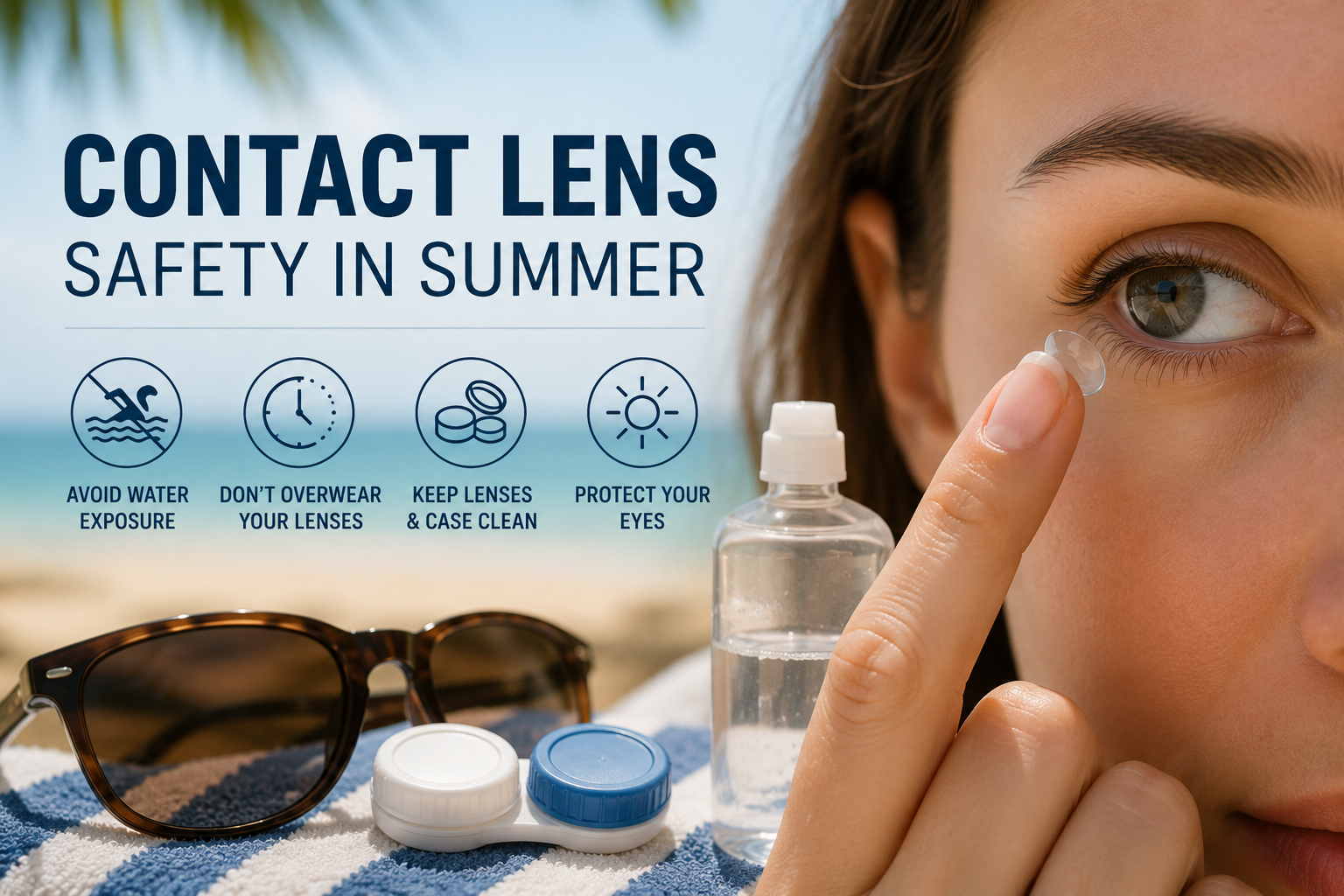
Contact Lens Safety in Summer: The Mistakes That Can Cost You Your Sight
Last June, a young professional from Vaishali came to me with what started as mild eye irritation. She had been wearing her contact lenses during a weekend at a pool party, swimming with them in, rinsing them with tap water afterwards because she had forgotten her solution. Within days, she had developed a severe corneal ulcer that required weeks of intensive treatment and left her with permanent scarring affecting her vision.
Her story is not unusual. Summer brings a predictable surge in serious contact lens complications. The combination of heat, sweat, swimming, dust exposure, and casual attitudes toward hygiene creates perfect conditions for sight-threatening infections.
As the best eye specialist in Vaishali, Ghaziabad, I want every contact lens wearer to understand: the convenience of lenses comes with responsibility. Summer demands extra vigilance. Here are the mistakes to avoid and the practices that protect your sight.
Why Summer Increases Contact Lens Risks
Heat affects contact lens behaviour. Lenses can dehydrate faster in hot, dry air, becoming uncomfortable and potentially damaging the cornea. Air conditioning, while cooling, accelerates tear evaporation and worsens lens dryness.
Sweat introduces bacteria and salt to the eye surface. When sweat runs into eyes wearing contact lenses, it carries whatever organisms are present on your skin into direct contact with the lens-cornea interface. Rubbing sweaty eyes with dirty hands compounds the risk.
Summer activities create specific hazards. Swimming with lenses exposes them to Acanthamoeba — a parasite that causes devastating keratitis. Dust storms coat lenses with particles that scratch the cornea. Sunscreen and insect repellent residue on hands transfers to lenses during handling.
The best eye doctor in Vaishali, Ghaziabad, sees a dramatic increase in contact lens complications every summer. Most are preventable with proper precautions.
The Biggest Mistake: Swimming with Contact Lenses
I cannot emphasise this enough: never swim while wearing contact lenses. Pools, lakes, rivers, hot tubs, even showers — all water sources harbour microorganisms that can cause serious eye infections.
Acanthamoeba keratitis is the nightmare scenario. This parasitic infection is extraordinarily difficult to treat, often requiring months of hourly eye drops, and can result in permanent vision loss or the need for corneal transplantation. Contact lens wearers who swim are significantly more likely to develop this infection.
Even chlorinated pool water poses risks. Chlorine does not instantly kill all pathogens, and the chemical itself irritates the conjunctiva. Lenses absorb pool water and hold contaminated fluid against your cornea for hours after swimming.
If you must see clearly while swimming, wear prescription goggles. If water contacts your lenses accidentally, remove and discard them immediately — do not simply rinse and reinsert them.
Tap Water: The Hidden Danger
Municipal tap water in India is not sterile. It contains microorganisms including Acanthamoeba, Pseudomonas, and other bacteria capable of causing serious eye infections. Tap water should never contact your contact lenses under any circumstances.
Never rinse lenses with tap water. Never top off your lens case with water. Never use saliva as an emergency solution. These shortcuts save seconds but risk permanent vision damage.
Sterile saline solution is not the same as multipurpose solution. Saline rinses lenses but does not disinfect them. Always use a proper multipurpose or hydrogen peroxide solution as directed. The best eye specialist in Vaishali, Ghaziabad, has seen infections resulting from confusion between saline and disinfecting solutions.
Summer Hygiene: Extra Precautions Required
Hand washing becomes even more critical in summer. Before any lens handling, wash hands thoroughly with soap and water, then dry with a lint-free towel. Sweat, sunscreen, insect repellent, and summer grime on your hands will transfer directly to your lenses.
Carry a travel-sized bottle of multipurpose solution when away from home. If lenses become uncomfortable, remove them properly rather than tolerating discomfort or using improvised cleaning methods.
Replace your lens case monthly — more frequently in summer if you are sweating into it or handling it with less-than-clean hands. Cases harbour biofilms that protect bacteria from disinfection. Never reuse the solution or top off the old solution with fresh.
Consider switching to daily disposable lenses during the summer months. Fresh lenses each day eliminate the accumulation of deposits, allergens, and potential pathogens that build up on reusable lenses.
Recognising Early Warning Signs
Contact lens complications often start subtly. Pain that seems minor initially can indicate a developing infection. Persistent redness, unusual discharge, light sensitivity, or blurred vision that does not clear when you blink all warrant attention.
If you experience any concerning symptoms while wearing contact lenses, remove them immediately. Do not assume discomfort will resolve on its own. Do not continue wearing lenses hoping things will improve.
Early intervention makes an enormous difference in outcomes. A corneal ulcer caught in its first hours responds to treatment far better than one that has had days to deepen. The best eye doctor in Vaishali, Ghaziabad, provides urgent evaluation for contact lens wearers with concerning symptoms.
Summer Travel with Contact Lenses
Travelling increases infection risk. Unfamiliar environments, disrupted routines, limited access to proper supplies, and temptations to cut corners all contribute. Plan ahead to maintain safe practices while away from home.
Pack more solution than you think you will need — running out should never tempt you to improvise. Bring backup glasses so you have options if lenses become problematic. Carry your prescription in case you need emergency replacement lenses.
Long flights present particular challenges. Aircraft cabin air is extremely dry, causing rapid lens dehydration. Consider wearing glasses during flights or using rewetting drops frequently. Never sleep in lenses during flights unless they are specifically approved for extended wear.
Alternatives to Daytime Contact Lens Wear
For those tired of managing contact lens risks, alternatives exist. Ortho-K lenses — worn only during sleep — reshape the cornea overnight, providing clear daytime vision without any lenses touching your eyes during waking hours.
This approach eliminates most summer contact lens risks. No swimming concerns. No sweat contamination. No dust accumulation. No dehydration during hot days. The lenses are cleaned and stored at home rather than handled throughout the day.
For patients with irregular corneas who require speciality lenses, Scleral lenses provide an alternative that is inherently more stable and less prone to contamination than standard contacts. Our clinic has extensive experience fitting both Ortho-K and Scleral lenses.
Frequently Asked Questions
Q: Can I wear contact lenses in a hot tub?
A: Absolutely not. Hot tubs are particularly dangerous due to warm temperatures that encourage bacterial growth, jets that splash contaminated water into eyes, and Acanthamoeba that thrives in these conditions.
Q: What should I do if I accidentally get pool water in my eyes while wearing contacts?
A: Remove the lenses immediately and discard them — do not attempt to clean and reuse them. Rinse your eyes with sterile saline or artificial tears. If any symptoms develop over the following days, seek immediate professional evaluation.
Q: Are daily disposable lenses safer than monthly lenses in summer?
A: Yes, generally. Fresh lenses each day eliminate cumulative contamination. However, daily lenses still carry risks if worn while swimming or handled with contaminated hands. Safe practices remain essential regardless of lens type.
Q: My eyes feel dry wearing contacts in AC. What helps?
A: Use preservative-free rewetting drops frequently. Position yourself away from direct AC airflow. Consider lenses specifically designed for dry conditions. If discomfort persists, the best eye specialist in Vaishali, Ghaziabad, can evaluate your dry eye condition and lens fit.
Q: How do I know if my eye problem is serious enough to need emergency care?
A: For contact lens wearers, significant pain, light sensitivity, discharge, or any vision changes warrant same-day evaluation. Do not wait to see if symptoms resolve. Corneal infections progress rapidly.
Q: Where can I get contact lens care in Vaishali?
A: Dr. Shalini Jain at Samyak Eye Care — the best eye doctor in Vaishali, Ghaziabad — provides comprehensive contact lens services including fitting, problem-solving, and management of complications. Visit our clinic for expert care.
Your Vision Is Worth the Extra Effort
That young professional from Vaishali learned a devastating lesson about contact lens safety. Her moment of convenience — swimming with lenses, rinsing with tap water — resulted in months of treatment and permanent vision changes. It did not have to happen.
Summer contact lens wear requires extra vigilance, not relaxed standards. Never swim with lenses. Never use tap water. Maintain meticulous hygiene. Recognise warning signs early. Consider alternatives like Ortho-K that eliminate daytime lens risks entirely.
Your eyes are irreplaceable. The minor inconveniences of proper lens care are trivial compared to the consequences of infection. Visit our clinic for a summer contact lens evaluation and personalised recommendations for safe summer wear.
Protect Your Eyes This Summer
Dr. Shalini Jain | Samyak Eye Care Clinic | Vaishali, Ghaziabad
Call: 98999 60700


