
Computer Vision Syndrome in Students: Managing Eye Strain from Online Learning
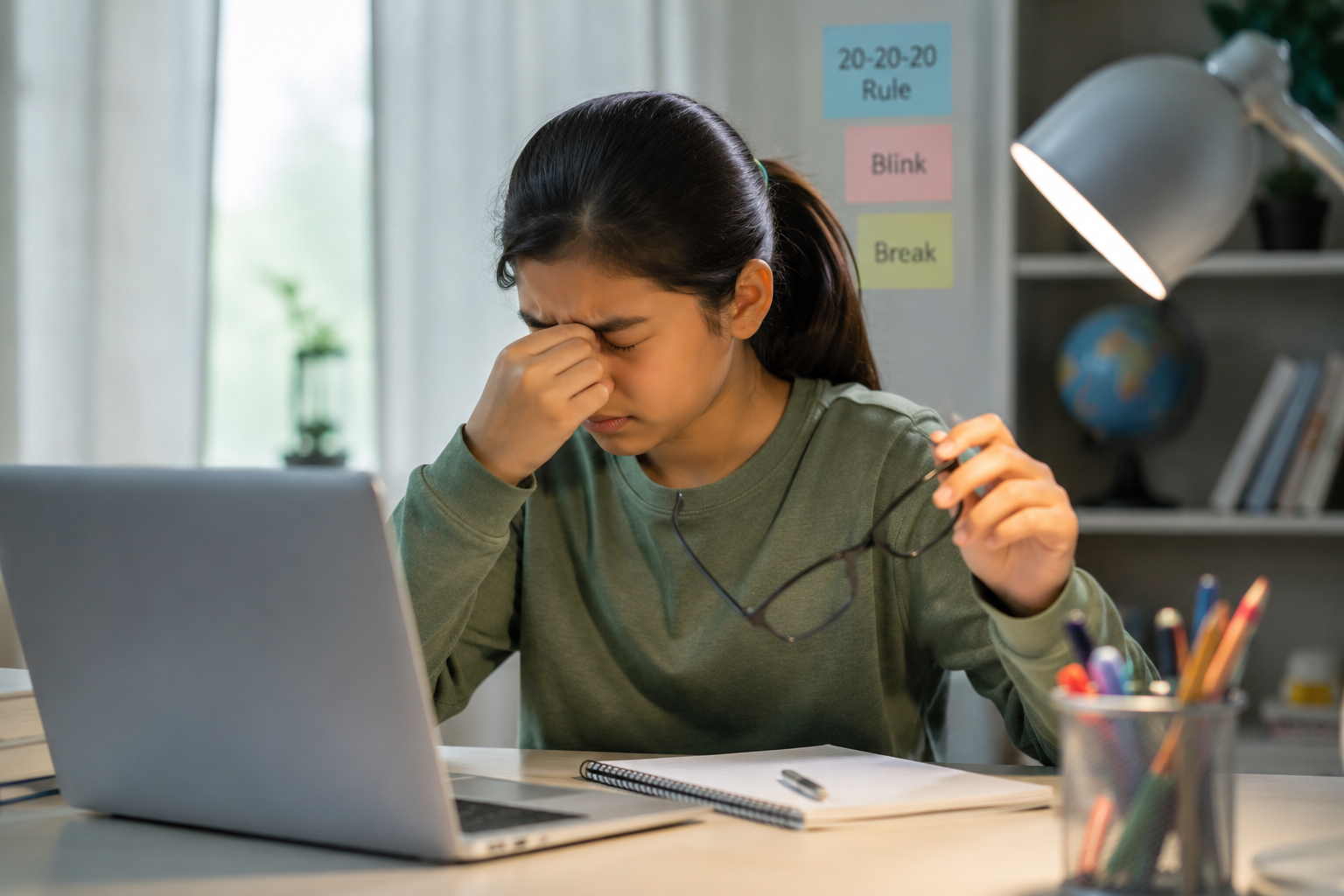
A Class 10 student from Kaushambi described her daily routine: wake up, attend online coaching from 6 AM to 9 AM, then school classes online until 3 PM, followed by self-study using educational videos and digital notes until dinner, and finally more screen time for homework and communication with classmates. Total screen exposure: 10-12 hours daily. Her complaint? Constant headaches, eyes that burned by the afternoon, and vision that blurred intermittently despite new glasses.
This scenario, once unusual, has become disturbingly common since online learning became mainstream. Students whose visual systems were designed for varied outdoor and indoor activities now spend the majority of their waking hours focused on screens at close range. The consequences — collectively termed computer vision syndrome or digital eye strain — affect academic performance, comfort, and potentially long-term visual health.
As the best eye specialist near Kaushambi, I help students manage the visual demands of modern education while protecting their eyes for the future. Understanding this condition empowers students and parents to take effective action.
What Is Computer Vision Syndrome?
Computer vision syndrome describes a constellation of symptoms arising from prolonged digital device use. These include eye strain and fatigue (eyes feel tired, heavy, or achy), headaches (particularly frontal or around the temples), dry, irritated eyes (burning, gritty sensation, redness), blurred vision (intermittent or sustained, at distance or near), and neck and shoulder pain (from postural compensation).
Several factors contribute. Screens demand sustained near focus, which strains the accommodation system. Blink rate decreases dramatically during concentrated screen viewing — often to one-third of normal — causing tear film instability and dryness. Screen glare, poor contrast, small fonts, and suboptimal positioning add additional stress.
For students, these factors compound over the many hours spent online. What might be tolerable for an adult working 4-5 hours at a screen becomes problematic when extended to 10-12 hours during intense academic periods.
The best eye doctor in Kaushambi evaluates whether symptoms stem purely from environmental factors or reflect underlying visual issues that screen use merely unmasks.
Why Students Are Particularly Vulnerable
Children's eyes are not simply smaller adult eyes — they function differently in important ways. Young focusing systems are powerful but prone to overactivity, and excessive near work can trigger sustained spasm that causes pseudomyopia (temporary nearsightedness from muscle fatigue).
Students are still developing visual skills and habits. Poor ergonomic practices established during school years may persist throughout life. The myopia that progresses during heavy screen use in childhood cannot be reversed — only managed.
Academic pressure often overrides physical discomfort. Students push through symptoms to complete assignments, attend classes, and prepare for examinations. Parents and teachers may not recognise when a child is struggling visually rather than academically.
Our myopia control clinic addresses the connection between intensive near work and progressive nearsightedness, offering interventions that can slow this concerning trend.
Recognising Symptoms in Students
Symptoms may not be immediately obvious. Students often adapt to discomfort, not realising their experience is abnormal. Watch for frequent eye rubbing during or after screen use, complaints of headaches (often attributed to stress or tiredness), squinting or leaning toward screens, requests for larger fonts or zoomed displays, and decreased reading speed or avoidance of reading.
Indirect signs include deteriorating handwriting (visual fatigue affects fine motor control), shorter attention spans during screen-based work, preference for audio or video content over reading, and increased irritability during homework time.
If symptoms worsen through the week but improve on weekends with less screen time, digital eye strain is a likely contributor.
Practical Management Strategies
The 20-20-20 Rule:
Every 20 minutes, look at something 20 feet (6 metres) away for 20 seconds. This simple practice relaxes accommodation and encourages blinking. Setting timer reminders helps establish the habit.
Screen Positioning:
Position screens at arm's length, with the top of the screen at or slightly below eye level. Looking slightly downward reduces exposed eye surface and decreases tear evaporation. Avoid screens that require looking upward.
Lighting Optimisation:
Ambient lighting should be approximately half the brightness of the screen. Eliminate glare by positioning screens perpendicular to windows. Use desk lamps for paperwork rather than relying on screen illumination alone.
Blink Consciously:
Remind yourself to blink fully and frequently, especially during concentrated viewing. Consider posting a blink reminder near the screen.
Artificial Tears:
Preservative-free lubricating drops, used proactively before symptoms develop, help maintain tear film stability. Keep them at the study desk for easy access.
Screen Settings:
Increase font size, adjust contrast for comfort, and consider enabling night mode or blue light filtering during evening use. Reducing screen brightness in dim environments decreases strain.
When Professional Intervention Helps
If symptoms persist despite implementing good practices, professional evaluation becomes essential. Some students have underlying visual issues that screen use merely reveals rather than causes.
Uncorrected or undercorrected refractive errors force visual compensation that becomes exhausting during extended screen use. Accurate prescription specifically for computer distance (typically 50-60 cm) may differ from distance or reading prescriptions.
Convergence insufficiency — difficulty coordinating the eyes for near focus — causes fatigue that worsens with prolonged screen viewing. Vision therapy can address this functional problem, often dramatically improving screen tolerance.
Accommodative dysfunction — weak or poorly controlled focusing — similarly affects sustained near work. Appropriate treatment can restore comfortable function.
At our clinic, we evaluate all aspects of visual function relevant to screen use, not just whether students can read a chart from a distance. The best eye specialist in Kaushambi provides a comprehensive assessment that identifies treatable causes.
Computer Glasses for Students
Glasses specifically designed for computer distance can significantly improve comfort. These differ from general-purpose glasses in several ways. They are optimised for intermediate distance (50-60 cm) rather than far or near. Anti-reflective coatings reduce screen glare. Blue light filtering may help some students, particularly with evening use.
For students who do not otherwise need glasses, computer-specific lenses with minimal prescription but appropriate coatings may be beneficial. For those already wearing glasses, a dedicated computer pair eliminates the compromises inherent in multipurpose lenses.
The investment in appropriate eyewear often pays dividends in comfort, concentration, and reduced symptoms over the many hours students spend on screens.
The Long-Term Concern: Myopia Progression
Beyond immediate comfort, there is a concerning connection between intensive near work and myopia progression. Research increasingly suggests that sustained near focus and insufficient outdoor time contribute to the rapid increase in childhood myopia worldwide.
Students who spend 10+ hours daily on screens during formative years may be accelerating their myopia progression beyond what would otherwise occur. High myopia (above -6.00) carries significant long-term risks, including retinal detachment, myopic macular degeneration, and early cataracts.
Our myopia control interventions — including Ortho-K lenses, atropine drops, and specialised contact lenses — can slow progression while students navigate the unavoidable realities of modern education.
Frequently Asked Questions
Q: Is blue light from screens harmful to my child's eyes?
A: The evidence for serious harm from screen blue light is limited. Blue light may affect sleep if screens are used near bedtime. Blue-filtering features may improve comfort for some users but should not be considered essential for everyone.
Q: Should my child wear glasses for computer use even if they do not need glasses otherwise?
A: Possibly. Some students benefit from computer-specific lenses even without a general prescription need. A comprehensive examination determines whether this would help.
Q: How many hours of screen time is safe for students?
A: There is no absolute safe limit. However, more hours mean greater cumulative strain and potentially more myopia progression. Implementing breaks, outdoor time, and good ergonomics helps mitigate risks regardless of total duration.
Q: Can computer vision syndrome cause permanent damage?
A: The symptoms themselves — strain, headaches, dry eye — are not permanent and resolve with rest and appropriate management. However, myopia progression associated with intensive near work is permanent, making preventive management important.
Q: Will reducing screen time help, or is it too late?
A: Reducing screen time (when possible), implementing breaks, increasing outdoor exposure, and optimising the viewing environment all help at any stage. It is never too late to improve visual habits.
Q: Where can I get my child evaluated for screen-related eye problems near Kaushambi?
A: Dr. Shalini Jain at Samyak Eye Care — the best eye doctor near Kaushambi — provides a comprehensive evaluation for digital vision syndrome and related concerns. Our Vaishali clinic is easily accessible from Kaushambi.
Protect Your Student's Visual Future
That Class 10 student from Kaushambi? Comprehensive evaluation revealed mild convergence insufficiency exacerbated by her screen-heavy schedule. Computer-specific glasses, vision therapy exercises, and strategic breaks now allow her to manage her demanding academic workload without the headaches and burning eyes that had become her daily reality. Her myopia control programme helps ensure that her prescription does not accelerate through these intensive study years.
Your child's visual comfort and long-term eye health deserve attention. Do not accept constant strain as an inevitable cost of modern education. Visit our clinic for comprehensive assessment and management strategies that enable learning without visual sacrifice.
Evaluate Your Student's Screen Vision
Dr. Shalini Jain | Samyak Eye Care Clinic | Vaishali, Ghaziabad
Call: 98999 60700


