
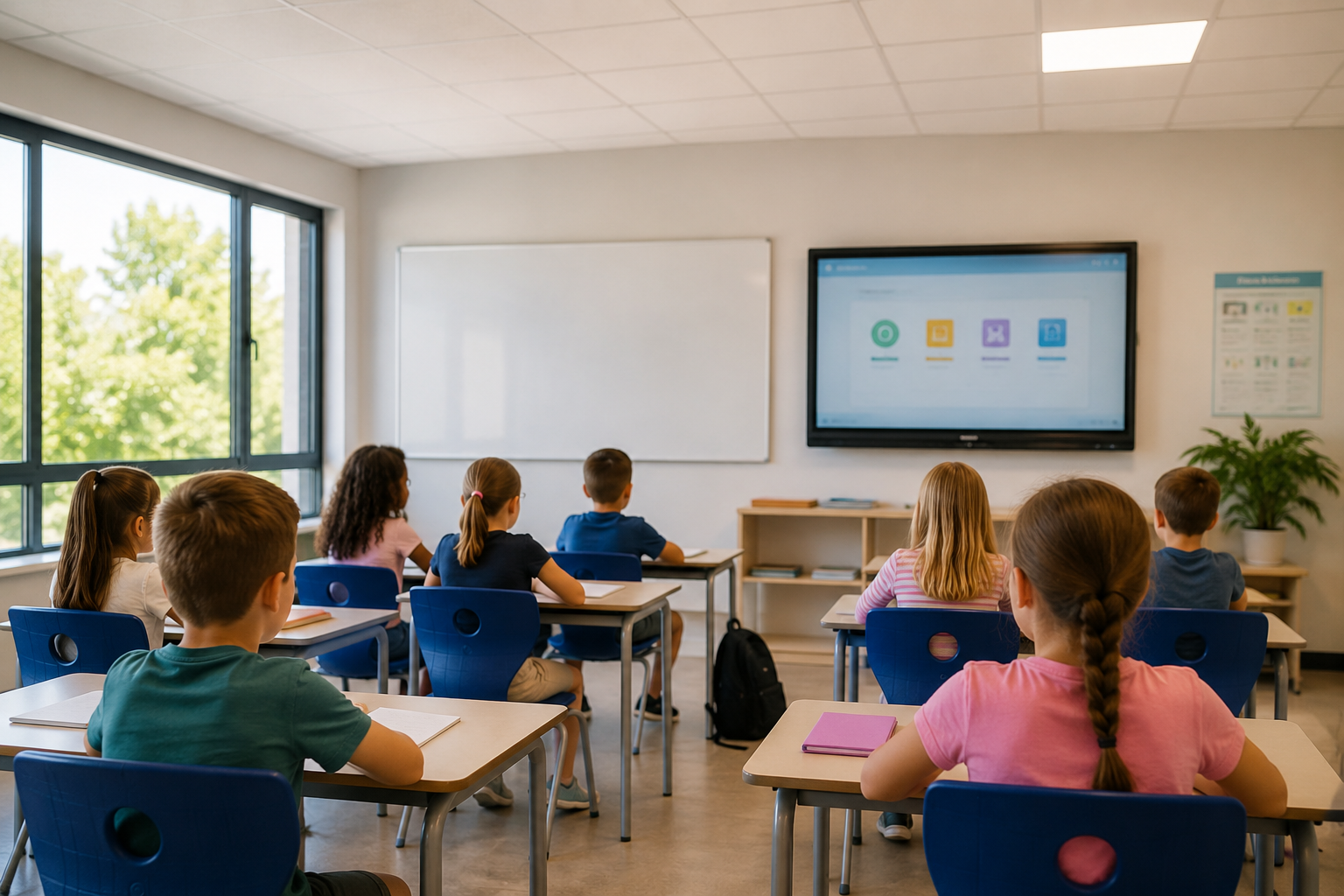
Classroom Vision: Optimal Seating, Lighting, and Screen Positioning for Students
A parent from Raj Nagar Extension recently shared a puzzling observation. Her son, a Class 5 student, complained of headaches every afternoon but never on weekends. His vision had been checked — prescription was current, and his eyes were healthy. The culprit turned out to be his classroom seat: positioned directly beneath a flickering tube light that created subtle but constant visual stress throughout each school day.
The physical environment where children learn profoundly affects their visual comfort and, consequently, their ability to concentrate and absorb information. Seating position, lighting quality, screen placement, and even wall colours influence how hard young eyes must work. When these factors align poorly, children struggle unnecessarily — often without anyone recognising the cause.
As the best eye specialist near Raj Nagar Extension, I help parents understand how classroom environments affect vision and what adjustments can make learning more comfortable. Here is what every parent and educator should know.
Why Classroom Environment Matters for Vision
Children spend approximately 6-8 hours daily in classroom settings during the academic year. Their visual systems work continuously — focusing on boards, shifting to desks, reading textbooks, viewing screens, and navigating social interactions. Any environmental factor that increases visual effort accumulates over these hours, potentially causing strain, fatigue, and reduced performance.
Unlike adults who can modify their work environments, students typically have little control over where they sit or how their classrooms are configured. They may not even recognise when conditions are problematic, attributing discomfort to tiredness, boredom, or difficulty with the subject matter rather than environmental causes.
The best eye doctor in Raj Nagar Extension frequently sees children whose symptoms resolve simply by changing their seating position or addressing lighting issues — problems that require no medical intervention, only environmental awareness.
Seating Position and Distance
Where a child sits relative to the board significantly affects their visual experience. Students with uncorrected or undercorrected myopia struggle to see clearly from back rows, squinting and straining throughout lessons. Yet front-row seating is not universally ideal either — students sitting too close to modern interactive displays may experience discomfort from screen brightness and the steep viewing angle.
For traditional blackboards or whiteboards, optimal viewing distance is typically 2-3 metres minimum. Closer seating forces excessive accommodation (focusing effort), while distant seating demands sharp distance vision that some children lack. The ideal position allows comfortable viewing without squinting or leaning forward.
Viewing angle matters as well. Students seated at extreme side angles must view the board obliquely, which can cause neck strain as they twist to see clearly. Central positioning within the visual range of the board provides the most comfortable viewing geometry.
For children with known vision issues, strategic seating becomes essential. A child with mild myopia awaiting glasses benefits from front-central placement. A child with photosensitivity needs seating away from direct window glare. Our paediatric eye care team provides specific recommendations based on each child's visual profile.
Lighting: The Often-Overlooked Factor
Classroom lighting profoundly affects visual comfort yet rarely receives the attention it deserves. Both insufficient lighting and excessive lighting create problems. Dim conditions force eyes to work harder, dilating pupils and straining to resolve details. Overly bright or harsh lighting causes glare, squinting, and photophobia.
Fluorescent lights, common in many schools, present specific challenges. Older tubes may flicker at frequencies that, while not always consciously perceived, can trigger headaches and eye strain in sensitive individuals. Cool white fluorescents produce harsh light that some children find uncomfortable. Positioning directly beneath fixtures concentrates these effects.
Natural light from windows, while generally preferable, introduces variability and potential glare. Students facing windows may struggle with brightness, while those with windows behind them may create shadows on their own work. Ideal classrooms balance natural and artificial light with appropriate window treatments.
The best eye specialist in Raj Nagar Extension recommends that parents observe their child's classroom conditions during school visits. Note the lighting quality, window positions, and where your child sits relative to these factors.
Screen Positioning in Digital Classrooms
Modern classrooms increasingly incorporate digital displays — interactive whiteboards, projectors, tablets, and computers. Each introduces specific visual considerations that traditional classrooms did not face.
Interactive displays and projectors should be positioned so that all students can view them without extreme neck extension or rotation. The top of the display should ideally be at or below eye level when students are seated normally. Viewing from below — craning the neck upward — causes strain over extended periods.
Screen brightness must balance visibility with comfort. Displays that appear adequately bright from across the room may be excessive for front-row students. Teachers should adjust brightness based on ambient lighting conditions, reducing it in darker settings and increasing it when competing with daylight.
For personal devices like tablets or laptops, students should maintain an arm's-length distance — approximately 40-60 centimetres. Screens positioned too close force excessive accommodation; too far strains to resolve small text. Device angle should allow viewing without neck flexion or extension.
Our Digital Vision Syndrome management helps students experiencing strain from classroom technology use, identifying whether the problem lies in the environment, vision correction, or visual function.
Creating Visual Breaks
The human visual system is not designed for sustained close focus over hours. Natural viewing involves frequent shifts between distances, allowing the focusing system to relax periodically. Modern classrooms, particularly those with heavy digital content, may deny eyes these natural breaks.
The 20-20-20 rule applies to classroom settings as well as home and office: every 20 minutes, look at something 20 feet (6 metres) away for 20 seconds. This brief distance viewing allows the focusing muscles to relax, preventing the fatigue that accumulates with sustained near work.
Teachers can incorporate visual breaks naturally — directing students to look out windows, at distant wall displays, or around the room between activities. Physical movement during breaks also shifts visual focus and encourages blinking, which often decreases during concentrated screen viewing.
Signs That Classroom Environment May Be Affecting Your Child
Certain patterns suggest environmental rather than purely optical causes for visual discomfort. Symptoms that occur primarily at school but not at home may indicate classroom-specific issues. Afternoon headaches that resolve over weekends often point to cumulative daily strain. Complaints that worsen in specific subjects (often those using particular equipment or seating arrangements) warrant investigation.
Children who rub their eyes frequently during homework about school topics, who avoid reading despite adequate vision, or who seem unusually fatigued after school may be experiencing environmental visual stress.
If your child reports discomfort, investigate the classroom setup before assuming a vision problem requiring treatment. Sometimes the solution is as simple as changing seats or addressing a lighting issue.
What Parents Can Do
Request information about your child's seating position. If your child has a known vision issue, communicate with teachers about optimal placement. Many teachers willingly accommodate such requests when they understand the reasoning.
Ensure your child's vision is current. A child with an uncorrected or undercorrected prescription will struggle regardless of environmental optimisation. Annual comprehensive eye examinations verify that correction remains adequate.
Teach your child to recognise and report visual discomfort. Children often adapt to discomfort without complaint, not realising that it is avoidable. Empowering them to identify and communicate problems enables earlier intervention.
Visit our clinic if symptoms persist despite environmental modifications. Some children have visual function issues — problems with focusing, tracking, or eye coordination — that require professional assessment and treatment.
Frequently Asked Questions
Q: Should my child sit at the front of the class if they have glasses?
A: Not necessarily. If glasses provide adequate correction, middle-distance seating is usually comfortable. Front seating may be helpful while awaiting new glasses or if the current prescription is slightly undercorrected. Discuss optimal placement with your eye care provider.
Q: Can classroom lighting cause permanent eye damage?
A: Poor classroom lighting causes discomfort and strain but does not cause permanent damage in typical situations. However, chronic strain can affect concentration, learning, and attitudes toward school. Addressing lighting issues improves comfort and performance.
Q: How close is too close for viewing a classroom screen?
A: For large interactive displays, students should be at least 2-3 metres away. For personal tablets or laptops, arm's length (40-60 cm) is appropriate. Closer viewing increases accommodative demand and can contribute to myopia progression.
Q: My child only has headaches at school. Is this a vision problem?
A: It could be environmental rather than optical. Investigate seating, lighting, and screen positions before assuming a prescription issue. If environmental factors seem appropriate, a comprehensive examination can identify any visual contributions.
Q: Should schools use warm or cool lighting?
A: Moderate colour temperatures (neutral white, around 4000K) generally provide comfortable illumination without the harshness of cool white or the dimness of warm white. Consistent, flicker-free lighting matters more than specific colour temperature for most students.
Q: Where can I get my child's classroom vision evaluated near Raj Nagar Extension?
A: Dr. Shalini Jain at Samyak Eye Care — the best eye doctor near Raj Nagar Extension — provides comprehensive paediatric eye examinations that assess both optical and functional vision needs. Our Vaishali clinic is easily accessible from Raj Nagar Extension.
Optimise Your Child's Learning Environment
That Class 5 student from Raj Nagar Extension? Once his seat was moved away from the flickering tube light, his afternoon headaches disappeared completely. No medication, no glasses change, no therapy — just environmental awareness and a simple adjustment.
Your child's visual comfort affects their ability to learn, concentrate, and enjoy school. Pay attention to the physical environment where they spend their days. Address modifiable factors that may be causing unnecessary strain. And ensure their vision itself is optimised through regular professional evaluation. Visit our clinic for a comprehensive assessment that considers both optical and environmental factors affecting your child's visual comfort.
Evaluate Your Child's Visual Comfort
Dr. Shalini Jain | Samyak Eye Care Clinic | Vaishali, Ghaziabad
Call: 98999 60700


