
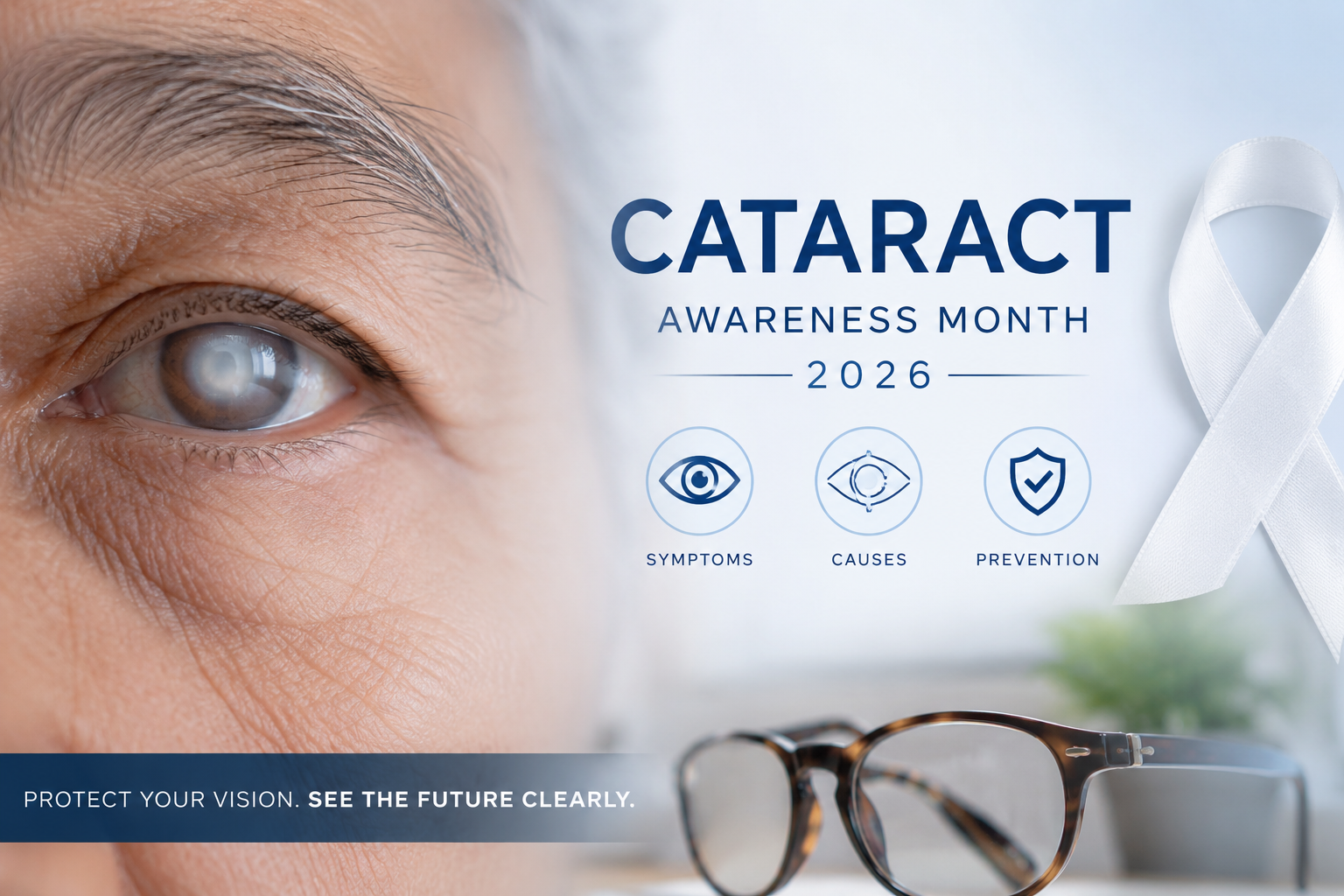
Cataract Awareness Month 2026: Understanding Symptoms, Causes, and Prevention — A Complete Guide
Doctor, everything looks foggy these days, like I'm seeing through a dirty window." This is exactly how Mrs. Sharma from Indirapuram described her vision when she walked into my clinic last month. She had been adjusting lamp positions, buying brighter bulbs, and blaming her old spectacles for months — never suspecting cataracts. Her story is not unique. I hear variations of it weekly from patients across Ghaziabad, and it reminds me why Cataract Awareness Month matters.
June marks Cataract Awareness Month 2026, and after 25 years of treating patients in Vaishali, I can confidently say that awareness is the first step toward preserving vision. Cataracts remain the leading cause of blindness in India, yet they are entirely treatable when caught early. The best eye specialist in Vaishali, Ghaziabad, will tell you: knowledge is your best defence.
What Exactly Are Cataracts? The Science in Simple Terms
Your eye contains a natural lens — a transparent structure that sits behind your pupil and focuses light onto your retina. This lens is primarily made of water and specialised proteins arranged in a precise pattern that keeps it crystal clear. Think of it like a perfectly clean camera lens.
As we age, these proteins begin to break down and clump together. These clumps create cloudy patches that scatter light instead of allowing it to pass through cleanly. The result? Your vision becomes progressively hazy, like looking through frosted glass. This clouding of the lens is what we call a cataract.
The process typically begins slowly in your 40s or 50s, though significant vision impairment may not develop for another decade or two. The best eye doctor in Vaishali, Ghaziabad, sees patients at all stages — from early lens changes detectable only during examination to advanced cataracts causing substantial vision loss.
Recognising Cataract Symptoms: Warning Signs You Shouldn't Ignore
Cataracts are deceptive. They develop gradually, giving you time to unconsciously adapt — which is precisely why so many people miss the early signs. At our eye care clinic in Vaishali, Ghaziabad, I always ask patients specific questions to uncover symptoms they may have normalised.
Blurred or cloudy vision is the hallmark symptom. Patients describe it as looking through a dirty window or foggy glass. Colours may appear faded or yellowed — whites take on a brownish tint. If your favourite white kurta suddenly looks cream-coloured in proper lighting, pay attention.
Night vision deteriorates significantly with cataracts. Patients from Kaushambi and Surya Nagar often mention that driving after dark has become uncomfortable — headlights create halos or starbursts that were never present before. Some notice double vision in one eye, a symptom that alarms people into seeking help quickly.
Interestingly, some patients experience a temporary improvement in near vision — they can suddenly read without glasses. This "second sight" occurs when early cataracts change the lens shape, but it is short-lived and signals progression, not improvement.
What Causes Cataracts? Risk Factors Every Adult Should Know
Ageing remains the primary cause — nearly everyone develops some degree of lens clouding by their 70s. However, certain factors accelerate this process significantly, and understanding them helps with prevention.
Diabetes tops the list. Elevated blood sugar damages lens proteins directly, causing cataracts to develop years earlier than in non-diabetic individuals. Every diabetic patient I see at our eye care clinic in Vaishali, Ghaziabad, receives annual comprehensive examinations — no exceptions.
Ultraviolet radiation from sunlight causes cumulative damage. Decades of sun exposure in Delhi NCR's intense summers without UV-protective eyewear significantly increase cataract risk. I recommend quality sunglasses to every patient, including children — protection must start early.
Smoking doubles your risk — the chemicals directly damage lens proteins through oxidative stress. Long-term steroid medications, previous eye injuries or surgeries, and excessive alcohol consumption also contribute. Family history matters too; if your parents developed cataracts early, you may follow the same pattern.
Cataract Prevention: What Actually Works
I am always honest with patients: you cannot completely prevent age-related cataracts. However, you can significantly delay their onset and slow their progression — sometimes by decades.
Quality UV-blocking sunglasses are essential — not the ₹200 pairs from street vendors, but properly certified lenses that filter UVA and UVB rays. Wraparound styles offer better protection. The best eye specialist in Vaishali, Ghaziabad, can guide you on appropriate eyewear for your needs.
Nutrition plays a measurable role. Antioxidant-rich foods — leafy greens, colourful vegetables, berries, nuts — support lens health. Vitamins C, E, and carotenoids like lutein and zeaxanthin show particular promise in research. A diet mimicking traditional Indian thalis with diverse vegetables provides excellent eye nutrition.
Quit smoking immediately if you haven't already. Control diabetes rigorously — every point lower on your HbA1c helps your eyes. Limit alcohol to moderate levels. These lifestyle modifications compound over time, potentially delaying cataract surgery by years.
Early Detection: Why Regular Eye Examinations Matter
Cataracts develop silently. By the time symptoms become obvious, significant lens clouding has already occurred. This is why the best eye doctor in Vaishali, Ghaziabad, emphasises routine comprehensive eye examinations — they catch problems before they become crises.
Adults should have baseline examinations at age 40, then follow their doctor's recommendations for frequency. Those with diabetes, a family history of eye disease, or previous eye problems need more frequent monitoring. Patients from Indirapuram, Kaushambi, and Surya Nagar trust our eye care clinic in Vaishali, Ghaziabad, for thorough evaluations.
Treatment Options: From Glasses to Surgery
Early cataracts do not require surgery. Updated spectacles, improved lighting, anti-glare coatings, and magnification can maintain functional vision for years. Surgery becomes necessary only when cataracts significantly impair daily activities — when you cannot drive safely, read comfortably, or perform your job effectively.
Modern cataract surgery is remarkably safe and effective. The clouded lens is removed through a tiny incision and replaced with a clear artificial intraocular lens. The procedure typically takes 20-30 minutes, uses topical anaesthesia (numbing drops), and most patients notice dramatically clearer vision within days.
At our Vaishali clinic, I guide patients through every stage — from initial diagnosis through surgical referral to post-operative care. Having one doctor who knows your eyes throughout the process makes a real difference.
Frequently Asked Questions
Q: At what age should I start worrying about cataracts?
A: Worrying is not productive, but awareness is. Schedule a baseline eye examination at 40, then follow your doctor's advice. If you have diabetes or a family history of cataracts, start monitoring earlier. The best eye specialist in Vaishali, Ghaziabad, recommends annual checks after 50.
Q: Can eye drops cure cataracts?
A: No. Despite what some advertisements claim, no eye drop has been proven to reverse or dissolve cataracts. Surgery remains the only definitive treatment for cataracts affecting vision. Be sceptical of miracle cure claims.
Q: Is cataract surgery painful?
A: Modern cataract surgery uses topical anaesthesia — numbing drops. Most patients feel pressure but not pain during the procedure. Post-operative discomfort is typically mild and manageable with standard eye drops.
Q: Can cataracts come back after surgery?
A: The removed lens cannot regrow. However, the membrane holding the artificial lens can cloud over time — called posterior capsule opacification. This is easily treated with a brief laser procedure in the clinic.
Q: Where can I get a cataract evaluation in Ghaziabad?
A: Dr. Shalini Jain at Samyak Eye Care — the best eye specialist in Vaishali, Ghaziabad — provides comprehensive cataract evaluations. We serve patients from Indirapuram, Kaushambi, Surya Nagar, and across Ghaziabad.
Q: How can I protect my child's eyes from future cataracts?
A: Start UV protection early with quality sunglasses. Encourage a diet rich in vegetables and fruits. Discourage smoking. These habits established in childhood provide lifelong protection.
Take Action This Cataract Awareness Month
Mrs. Sharma from Indirapuram caught her cataracts at a manageable stage because she finally listened to her daughter's advice and got an eye check-up. Early detection gave her options — updated glasses now, surgery when truly needed later.
This June, make your vision a priority. If you are over 40 and have not had a comprehensive eye examination recently, schedule one. If you have noticed vision changes you have been dismissing, get them evaluated. The best eye doctor in Vaishali, Ghaziabad, is here to help — whether you need reassurance, monitoring, or treatment.
Schedule Your Cataract Evaluation Today
Dr. Shalini Jain | Samyak Eye Care Clinic | Vaishali, Ghaziabad
Call: 98999 60700


